A business plan is the key to entering the market. ACG published the most detailed Electric Car Business Plan for the USA. This plan gives you market intelligence about the electric car product portfolio, competitor scenarios, customer surveys, and capex in the USA.

This paper gives you every small, sensitive, meaningful, and crucial information.

In the electric car sector, the American auto industry faces challenges in keeping pace with global competitors in battery cell design, power electronics, software development, extended battery range, making it fit for the mass market, and advanced rapid charging technologies. Additionally, the transition to software-defined vehicles presents a further challenge for traditional OEMs. As software becomes the key differentiator in vehicles—enhancing infotainment, performance, connectivity, autonomous driving, in-cabin experiences, and continuous updates—companies prioritizing software design over hardware are increasingly positioned to lead the market. Setting up a manufacturing plant in a cost-effective location within the USA is a strategic solution for entering the American electric car market.

Focusing on producing SUVs, Sedans, and Pickup Trucks will effectively cater to various customer segments.

Electric Car Business Plan USA

The cost of setting up the factory, the investment required, ROI, the Manpower requirement, the manpower’s skill, the salary range, the number of employees, the raw material cost, the Supplier’s option, Software development, Battery sourcing or in-house LFP battery, Power Electronics cost, robotics, number of assembly lines,  and other key information.

The other part concerns forecasting, electric car market dynamics, policy, sales, marketing, revenue, profit, model-level pricing trim, customer segmentation, technical and feature requirements, and business strategy.

The Electric Car Business Plan suggests the best locations to establish an Electric car plant and why. This information is based on our interaction with US government officials.

The USA’s electric car market is transforming rapidly, driven by stringent emission regulations, robust government incentives, affordable price points, and growing consumer awareness of environmental sustainability. This business plan outlines a strategy to capitalize on the burgeoning opportunities within the American EV market, leveraging innovation, technology, and customer service strengths.

Competitors analysis help to find the gap, add value and role of customer delight in the success journey of the Electric car. Tesla, Rivian, Ford, BMW, Vinfast, Mercedes, Porsche has been considered.

Marketing plan before and after launching the Electric car in the US. The detailed with the budget allocation and allocation of the budget. How to communicate to the target customers, what brand perception need to create and how. Complete road map of Business strategy.

In next step, how to sell the Electric car. Which are the various major sales channel and which are most successful model. For the US Market Hybrid Sales channel partner is the best option.

This Business plan guide companies to how to be success in the US electric car market.

Indian Light Duty Electric Truck Forecast 2030 is expected to register a 42 percent CAGR between FY 2025 and FY 2030. ACG released the Truck applications-wise Indian Electric Truck Market Forecast 2030. The mini and pickup truck segments are growing, and there is high growth potential in the electric truck segment.

Indian Light Duty Electric Truck Forecast 2030

Two different forecast scenarios have been created based on various factors. The forecast database is based on Mini, Pickup, and Light Duty Trucks. The other applications are also further classified in each segment. The critical Economy, Policy impact, indicators, Customer sentiments, Product feasibility, and Truck market dynamics have been considered to create the Indian LDT E-Truck Forecast 2030.

The exclusive feature of the forecast is, that it is based on mainly Application of the Truck. We have considered more than 35 Applications. These applications are in demand and provide an attractive payback period. ACG is the only Consulting firm which provides Application wise Truck Database for both ICE and Electric Trucks.

The Model and OEMs Forecast is also available on request.

Along with the truck’s Key application, other significant factors are considered, such as GVW, Payload, Battery size, Battery price, loading pattern, Charging options, and other technical specs.

Database provide you following information:

What is the Electric Truck market size in the following category from FY 2025 to FY 2030:
  • Mini Electric Truck
  • Pick up Electric Truck
  • Light Duty Electric Truck
  • Intermediate Electric Truck
Application wise Market Size:
  • Which are the Top current and potential key application for penetrate the Electric Trucks
  • What is the level of suitability of those Truck application
  • What’s should be the key specs and features required for those key Truck application
  • What is the customer profile for each application
How this database can be beneficial for various stakeholders:
  • Electric Truck Product Planning and Product Strategy
  • Sales Planning and Strategy of Electric Mini, Pickup, and Light Duty Truck
  • E Truck Production planning
  • Marketing Campaign
  • Find Customer segment for your product
  • Electric Truck Product-Market fit Analysis
  • Electric Truck Development
  • Define Electric Truck Technical Specs and Features
The significant players in Electric Truck segment:
  • Tata Motors
  • Mahindra
  • Switch Mobility
  • Euler
  • Omega Seiki
  • EVAGE
  • Eicher, and
  • EKA.

Recently, Mahindra and Euler launched new Electric Trucks in India. Some new models are also in the pipeline.

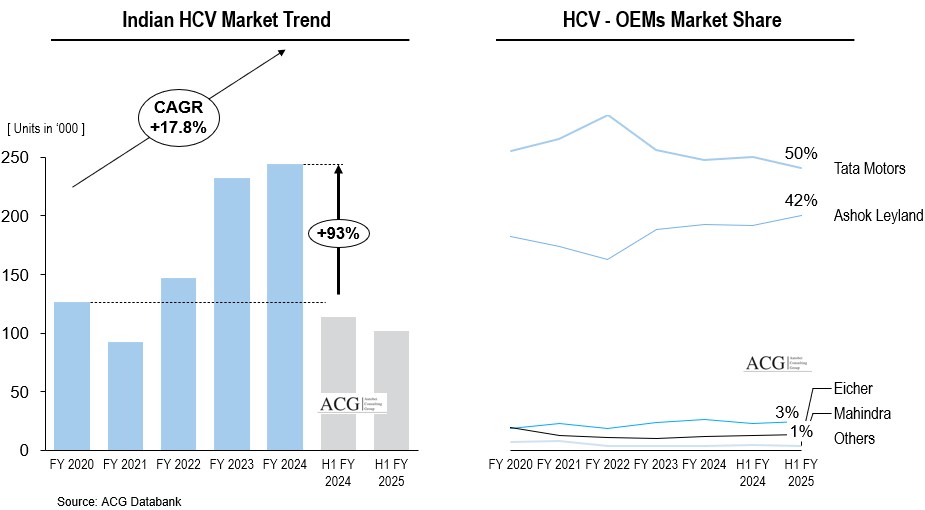
Indian Truck and Bus Model wise Sales and Production Data is our exclusive data. The data map with city level and Application wise sales. from FY 2009 to FY 2029. This data helps OEMs, Tier 1 & Tier II suppliers to create business strategy and Target New Segment, After Sales or After Market Strategy, Dealer and Business Strategy Development, Markey Trend, Segment Growth, Sales Planning, Production planning, Marketing and Advertising Strategy

We cover more than 90 per cent of sales of Truck and Sales segment. The database is available for one-time purchase and Quarterly Subscription.

After the implementation of BS-VI, there are significant changes happened in Truck and Bus specs. The following data points are considered:

  • OEMs (Brand) Name
  • New product launches,
  • Sales Volume
  • Production Volume
  • GVW
  • Payload
  • Truck Applications
  • Tyre Size and Tyre Type
  • Number of Cylinders
  • Displacement
  • Vehicle Type
  • Engine Specs
  • Vehicle USP
  • Duty cycle per day
  • Product Portfolio, and
  • Pricing.

ACG released Indian Truck and Bus Model-wise Sales and Production Data from FY 2009 to  FY 2029. The data is available in Quarter-wise also.

Indian Model level Truck and Bus Production and Sales Data

Truck Segment:

  • Rigid Haulage
  • Tipper
  • Tractor Trailer
  • Special Application

Bus Segment:

  • School Bus
  • Staff
  • STU
  • Private
  • Other Application

Following Truck and Bus Sub Segments has been covered.:

  • Mini Truck,
  • Pickup,
  • Light Duty Truck,
  • Medium Duty Truck,
  • Heavy Duty Truck,
  • Mini Bus
  • Light Duty Bus
  • Medium Duty Buses
  • Heavy Duty Buses

OEMs included:

  • Tata Motors,
  • Ashok Leyland,
  • BharatBenz,
  • Volvo,
  • Scania,
  • Eicher,
  • Force Motor,
  • SML Isuzu,
  • Mahindra

The Data is further available at the State level also.

ACG updated the latest data of Global e-Powertrain who supplies whom Database. There are more than 600 suppliers mapped to their OEMs- Model wise.

The supply chain is one of the key issues in Electric Vehicle. This Database helps get competitive quotes and resolve supplier constraints. Top 10 suppliers in each category and region-wise. This database also gives strategic direction for investment firms to make decisions on their investment strategy.

FinDreams and Tesla are key players in eAxle and Traction Motors, Denso, Bosch in Inverter, Toyota Industries, TDK, Bosch, Delta Electronics are key players in the DC-DC Converter segment.

CATL, BYD, LG Energy, and Panasonic control around 70% market share in the Battery supply for Electric Vehicle segment.

Key Regions:

  • Europe – Country wise
  • China
  • Japan
  • USA
  • Asian Suppliers and Suppliers-JV  including India, and
  • Other

There 4 major categories defined in Electric Vehicle Powertrain:

  • e-Axle
  • Traction Motor – Front and Rear
  • Battery
    • Battery Cell and Module
    • Battery Pack
    • Battery case
    • Cathode and Anode material
    • Battery management system
    • Battery Thermal System
    • Miscellaneous parts
  • Electric Drive
    • Traction Motor
    • Inverter – Si and SiC
    • DC-DC Converter
    • VCU – vehicle control unit
    • OBC – Onboard Charger
    • Power Distribution
    • Power Module
    • Transmission

Companies included:

  • CATL
  • BYD
  • LG Energy
  • Panasonic
  • Tesla
  • FinDreams
  • XPT Technology
  • UAES
  • Bosch
  • Delta
  • Valeo
  • Mitsubishi
  • Zhuhai
  • Hyundai Mobis
  • Denso
  • Samsung
  • Nanjing Sunwoda
  • Svolt Energy
  • Hitachi Automotive
  • TDK
  • Nichicon
  • HellaBorgWarner
  • Dana
  • ZF
  • Mareli
  • Aisin
  • Zhixin Semiconductor
  • ONSemi
  • Infineon
  • Vitesco
  • BYD
  • Nidec
  • Toshiba
  • XPT Technology and
  • Other

OEMs – Model wise:

  • BYD
  • Zeekr
  • Volkswagen
  • Volvo
  • Tata Motors
  • Citroen
  • Fiat
  • Kia
  • Opel
  • Peugeot
  • Fiat
  • Dongfeng
  • Mahindra
  • GAC
  • Beiqi Foton
  • Hino
  • Opel
  • SAIC
  • Changan
  • Hyundai
  • Jaguar Land Rover
  • NIO
  • WM Motor
  • Daimler
  • Ford
  • BMW
  • Audi
  • Xpeng
  • Geely
  • Suzuki
  • FAW+JVs
  • Subaru
  • Mazda
  • Nissan
  • Honda
  • Mitsubishi and
  • Other

Also check our another Suppliers database here.

German Electric Car Market Forecast is an exclusive Customize report. Germany is the largest car market in Europe, and electric cars are more popular than diesel cars. The European Automotive Industry contributes 7% of Europe’s GDP and employs around 14 million people.

There could be a deep impact on Germany’s Economy and its worldwide Automotive Business if the country loses its strong grip on the Automotive Business or Electric Car market.

The European electric car market is projected to reach a 25% market share by 2026. If Chinese brands control the German Car market, they will dominate most of the markets globally. There is a risk that German or European manufacturers will lose their control for the next two to three decades.

German car brands have ruled the world with their quality and innovation for decades. The Automotive Industry is the backbone of the German economy. But now, the German Car Market is facing heavy headwinds from Chinese OEMs. The Chinese Electric Car brands are ready to shake the German Electric Vehicle markets.

BYD is aggressive in winning the German customer’s trust. To win the battle of the European Electric car market, the one who can offer the most affordable Electric Vehicle first is Geely Group, NIO. Geely Group and NIO are also in a queue to make their effective presence in Europe and Germany. Through aggressive marketing strategies, Chinese brands strive to be the first choice in brand recall.

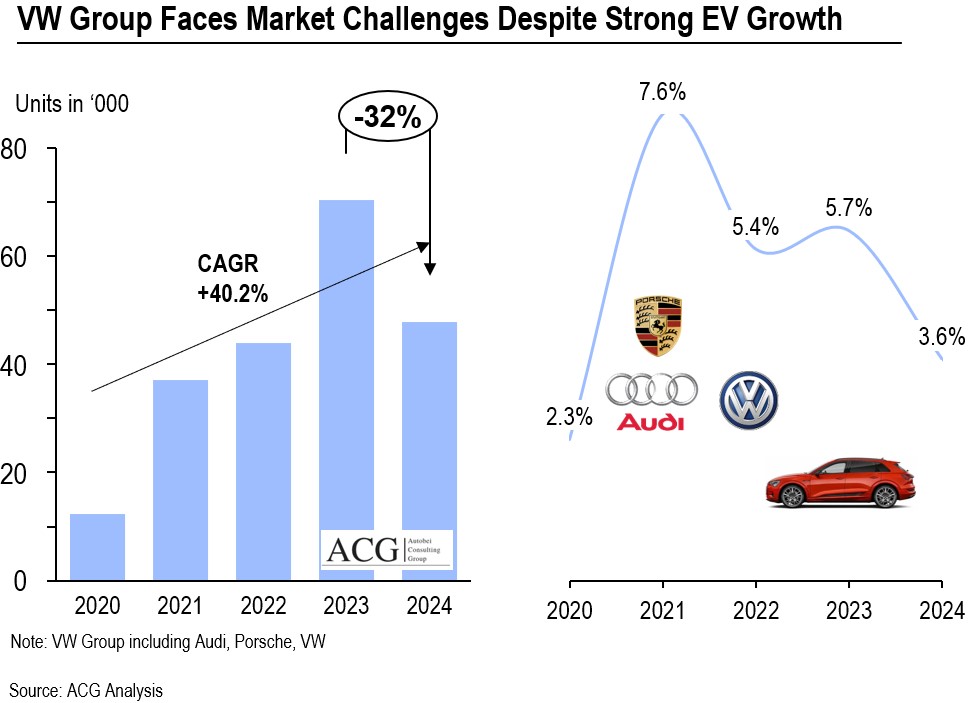
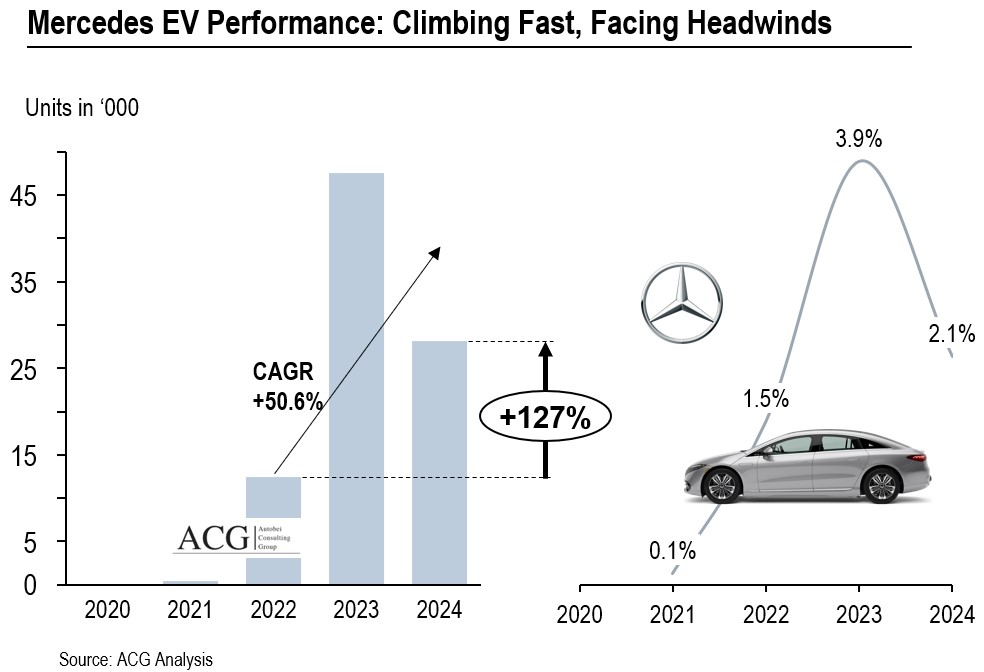
German legacy brands like BMW, Mercedes, Volkswagen, and Porsche need to be innovative quickly and handle the supply chain issue to maintain their leadership position in Europe and the Global market.

The support from the European Union and the German government plays an important role in bolstering the industry. It’s worth heavily supporting the German automotive industry; it’s akin to supporting your economy.

The BEV market share is registering impressive growth every year globally. China is the main key driver behind this BEV sales growth. The ICE and mix of other fuel-type vehicles is expected to limit around 40 per cent market share by 2030. The vehicle’s total production will touch 82-83 million units by 2030. BEV would have a 45 percent market share by 2030 globally.

Global Car Production Forecast

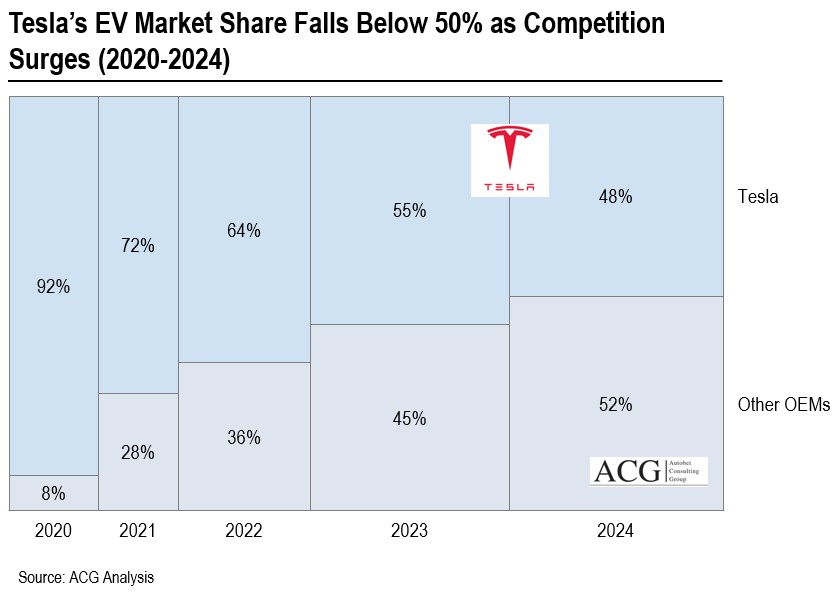
In 2023, BYD experienced consistent month-on-month sales growth, while Tesla’s market share declined by 13 percent compared to 2022. Despite this, Tesla’s Model Y saw a remarkable 50% growth. Conversely, BYD’s market share increased by 7%, indicative of Chinese OEMs’ dominance in the top 10 sales of 2023. BYD Seagull and Song PLUS played a major role in increasing the company’s market share in 2023.

Global Electric Vehicle Sales 2023

Toyota maintains its leadership position in Global Car Production. In 2023, the top 10 OEMs control more than 45% of global car sales. Volkswagen and Honda are in second and third place.

BYD reached 5th position. The company is currently focused on HEV Technology and is investing around 64 billion euros. Electrification and Digitization are two major areas where OEMs and Suppliers will invest in the next 6 to 7 years.

More than 600B Euro is planned by OEMs to invest in developing Electric Vehicle and digitization.

Top 10 car Brand in 2023

China, Europe, and USA are three major markets for Electric vehicles. In the second phase, India and some other markets will drive EV growth. In the next 2 years, the European EV market will touch 35 per cent, China 40 per cent, and the USA 30 per cent of the market share. The USA is playing smartly by introducing the IRA which is working like a no-entry phase for Chinese brands. Now Chinese brand is trying to enter Mexico. BYD is building a production plant in Mexico.

The Chinese market is very competitive and price-sensitive. Many affordable Chinese models are available starting from 9000 euros.

Three largest Electric vehicle Market forecast

Each major market exhibits unique characteristics in terms of the EV ecosystem, customer acceptance, the availability of BEV models, pricing after subsidy, and EV policies. Among these factors, EV policy emerges as particularly influential in driving initial EV sales penetration.

More than 100 new electric car models has been launched in China.

Major Electric Car markets assessment

Short and Long-term European battery electric vehicle (BEV) production, long term production forecast is promising.

European Electric car Market forecast

There are four clusters in the European Electric Car market. Larger markets such as Germany and France require government support or effective policies to boost BEV sales, while countries like Belgium and Denmark benefit from robust government support across various initiatives. France has taken some steps to protect its market from Chinese electric brands. It’s evident that certain nations offer a particularly attractive landscape for Electric car penetration.

European Electric Car Market Analysis

Over the past three years, Polestar’s market share has decreased by 8%, whereas BYD has seen its market share nearly quadruple. BYD currently offers six models, Volvo has 12 EV models with plans for four more, and Polestar, facing challenges in the European market, currently offers four models. It is expected that all OEMs will add additional models to their portfolio in the next two years.

Chinese Car Market share in Europe

BYD became number 1 in Electric car sales in 2023. Company overtook Tesla in last quarter of 2023. Even BYD is running commercial ads on mainstream TV channels in a prime time slot. BYD is Strong in China market and the company is looking at one of the largest car markets, Europe. The company is planning to launch more than 5 new models including Dolphin and Seal in Germany. Most OEMs moving to online sales but BYD is taking the traditional root of sale its cars. Tesla was ranked 12th with 1.8 million sales. It is expected that Tesla could be in the top 10 OEMs by 2025.

Tesla and BYD Electric car sales trend

The German BEV car market grew by 11.4 per cent in 2023. German Brand Volkswagen registered 11 per cent growth with 14 per cent market share. By the end of 2023, VW will be the leading brand in Germany. Volkswagen is aggressive in the electrification of its Electric car portfolio. The supply chain is the most critical issue for the company, specially getting the Topside closed cooler power module. If Volkswagen gets the power Module as per its production plan, the company can keep its leadership position in Europe. The company is also trying to acquire some power module manufacturing firms to secure the supply. Alternatively, the company needs to manufacture its power module. The business case is positive for high-volume BEV vehicle production. The best part of VW strategy that they are directly buying the semiconductor from semiconductor suppliers.

Tesla slipped to second position but is still the leader in the premium segment. The Model 3’s poor performance was the key reason that Tesla ranked second in Germany.

BMW, Audi, and Mercedes-Benz are growing fast in the high-end car segment. Their market share was 6,7, 7, and 8 percent in 2023, respectively. BMW is starting to get an eMPacK power module, which is a closed top-side component from 2024. However, it is heavier compared to other power modules. This component helps to increase the production volume.

Electric Car Market share 2023 in Germany

BYD is the Top Brand in China in NEV sales with a 35% market share in 2023. BYD’s margin is squeezed due to tough competition from brands like Geely and other local brands.

China Electric and ICE brand wise market share 2023

We have created the mental map of BYD based on Customer feedback. We have selected some cities in Germany to draw the mental map of BYD. We asked: What comes to your mind when you think about BYD? The key components are Product, Value, Technology, Service, Brand, Social Impact, and others. Below is the BYD Golden Arches:

BYD Mental Map

Qualitative and quantitative Research is always part of our study which give much better understanding and connect the dots of Product, Strategy, Sales, and other part of the business.

We interact with potential customers, Current customers, and rigid to replace ICE vehicle.

In our survey, 80 percent of buyers gave meaningful insight into their expectations, challenges, and key drivers and touched on other points of the customer journey. Some Germans are very open to adopting a Chinese Car, and some still do not like to even consider the Chinese brand. The low price is one of many reasons to buy a Chinese Electric car, but the combination of low price and comparable quality gives value to German customers.

German Electric Car Customer Sentiments Survey

In 2023, 29 percent of potential buyers are ready to accept the Chinese brand in their next purchase. This is the target segment of brands like BYD, MG, NIO, and Polestar. However, a large population—71 percent—likes to associate with German brands only. This is expected to change after a year.

Most existing VW ID.4 and ID.5 customers are satisfied with their cars’ performance. Similarly, the Tesla Model Y successfully fulfills its customers’ expectations of premium parameters.

Willingness to pay for Chinese Brands in Germany

Two factors play the most important role in the success of Chinese brands. Innovation, speed of development of new technology, and its implementation are key strengths of Chinese OEMs. Affordability, accepted quality level, and Availability are the key drivers of Chinese brands.

Why Chinese Car companies are successful in Europe

Align all major stakeholders to win the market. Such an approach gives German OEMs a new edge. It is a complex task, but it is the most effective way to compete with the Chinese and Tesla brands.

Align the all-major stakeholder to win the market

BYD, NIO, Geely, and Huawei are entering with diversified strategies. In just a few months, BYD has entered 11 new European markets. Adopting or aligning with German culture is a challenging task for OEMs. German and Chinese corporate cultures are very different. Communication styles (Direct and Indirect) are also opposite each other. For example, Huawei is offering to work for them on a contract basis for 2 years.

Huawei is doing groundwork to establish a charging network in Europe.

Chinese companies strategy for German market

Emotion and Quality are two parameters that customers consider when positioning the brands. Mercedes Benz ranked top in Emotion and Quality, followed by Audi, and BMW. Volkswagen is also coming in top rank on emotion parameters.

Audi, Mercedes, and BMW are strong brands in Germany

We have worked on the costing and pricing strategy of Chinese OEMs. The Chinese subsidy also helps to sell the vehicle at a winning price bracket.

The interesting fact about the survey is that BYD became popular in Germany in just 12-18 months time frame. After announcing sponsoring the Euro2024 Cup, the brand will be known to almost every house. This will also help to build a trusted brand in Europe. Chinese brands know that if they are successful in the European market, they can write the success based on their acceptability in European markets.

Value proposition given by Chinese OEMs

BEV sales from China in Germany noted impressive growth in 2023. Chinese OEMs increased their exports to Europe by 123% between 2019 and 2023. It is expected that next year, they will exceed 1.2 million cars. India also became the top choice for European OEMs to build in India and export to Europe.

Chinese Electric Car Export to Germany

The European Union is working on protecting its market from importing vehicles by implementing regulations. However, it is much better business practice to support European OEMs in competing with Chinese Cars rather than creating a fence for Chinese cars. Around 24% of cars sold in Europe were imported from other countries.

Chinese BEVs saw a huge sales surge in Germany

MG was the biggest gainer and grew by 34 percent in 2023. Great Wall Motor, NIO, and BYD have had effective presences in just one year. NIO has introduced LiDAR technology in its car, which is one of the safest cars in its segment.

Key Highlights of the full report:

  • Global BEV Production and Sales Forecast
  • How German OEMs can maintain the leadership position?
  • Model and Brand wise Production forecast
  • Brand Strategy Adopting by Chinese Car Brands
  • OEMs wise Strategy Analysis of Electric Car Portfolio
  • Chinese Car Pricing Strategy of Electric Car
  • What kind of steps need to be considered by EV stakeholders to support local players like Mercedes, BMW, Audi, VW etc?
  • Brand-wise market share analysis in Germany and China
  • Product Portfolio of Chinese OEMs and Germany

The components of the Electric Vehicle play a crucial role on costing of the vehicle. Compared to ICE Vehicles, EVs have fewer parts but are more expensive.  Having an EV component level price helps to control the cost of the vehicle, helps to know the feasibility of the EV project, helps with business case review and analysis, product planning, deciding selling price with sales strategy, and so on.

For example, the power module is the major cost contributor to the inverter. The semiconductor is the major cost component of the power Module. SiC is more expensive than Si semiconductors. If the inverter is more efficient or heat loss is minimal, then its cost increases proportionately. So, there are multiple fonts in the cost structure of the Electric Vehicle.

Buying the semiconductor or power Electronics from the most economical resources can save up to 6 to 10% cost. Some of the Semiconductor Suppliers are Infineon, Wolfspeed, Rohm, Bosch, STMicroelectronics, and Renesas. Rohm is highly cost-effective, and Infineon maintains superior-quality Semiconductors.

Bosch acquired a USA-based TSI semiconductor to control the cost of its power module device and for a secure supply of SiC semiconductors.

Recently, Wolfspeed invested heavily in building new Silicon semiconductors to meet the demand for Electric vehicles and maintain its leading position in this technology.

Wolfspeed is also working on a discrete power module device with ZF. This is expected to be cheaper than the Semikron Danfoss Power Module.

Due to the high demand for semiconductors, new semiconductor manufacturing companies are entering this segment—Some companies manufacture SiC semiconductors by licensing established semiconductor suppliers.

Battery packs cost the most significant portion of the Electric Vehicle. There is a cost war between CATL and BYD. The two battery manufacturers control more than 35 percent of the market share.  Upgraded battery technology and lower Lithium prices cut the price with better energy density.

Electric Motor: The high-performance and efficient motor may have a higher manufacturing cost, which is reflected in the EV BOM cost.

The segment covered of Electric Vehicle:

  • Electric Car
  • Electric Truck
  • Electric Bus
  • Electric Two Wheeler
  • Electric Three Wheeler
  • Other types like off-road Electric Vehicles

Name of the Electric Vehicle components:

  • DC-DC converter
  • Onboard charger
  • Traction motors
  • Motor control unit
  • Battery – LFP, Sodium Ion, NMC, Lead Acid battery
  • Semiconductor – Si and SiC
  • e-throttle
  • Angle sensor
  • Hall /Speed sensor
  • Handlebar switches
  • Cluster
  • Controllers
  • Flasher
  • Side stand sensor
  • AVAS
  • SMART BMS
  • OBD
  • V2X

The Indian Automotive Component Market size is USD 74.8 billion and 33 per cent growth in FY 2023. It is expected that 16 per cent growth will be registered by FY 2025.

ACG is known for its key expertise in the Automotive Industry. We are working with almost every stakeholder of the Automotive Industry like OEMs, Dealers, Financers, Venture Capital, Software and others.

Some of the Indian Automotive Aftermarket Business problems and Challenges:

  • Why Losing market share;
  • How to understand Short and long-term trends;
  • Why gain market share without knowing the reason
  • Analysis of impact of new Suppliers competitors;
  • Understand the need for new or innovative products; and
  • Understand and Prepare risk of disruption in the Automotive Aftermarket industry

Our Approach:

  • Who are your customers?
  • How can you enhance your strengths, Identify weaknesses, and how can you improve the business activities?
  • Understand the customer behaviour
  • Cost Optimization
  • Competitive forces analysis and outlook

Automotive Vehicle PARC (VOI) data shows a tremendous business opportunity in the After Market Automotive segment.

Recently, we conducted a study on After Market Revenue Study on How to increase revenue and profit in Indian Automotive Aftermarket segment As per our study, we have found that with the right strategy the Car, Commercial vehicle, Two Wheeler dealers can increase their revenue at least by 30 per cent in 1 to 3 years.

We have analysed the Customer experience of each segment and behaviour at the dealership and also the dealership approach and tools to match and convince customers. Our Qualitative and Quantitative methodology assists in creating the growth blueprint of this segment.

The trust is missing between customer and Dealer. Another challenge is customers prefer to get the vehicle at a local garage than an Authorised workshop due to cost savings.

Recently, the Automotive dealers introduced some tools to make the maintenance and repair transparent like a Computerised health check-up, parts replacement Video shoot, return the old parts to the customer and others.

But the key is how to build trust and convince customers to follow OEM’s authorised workshop recommendations.

ACG has identified some of the key issues and how to build a bridge between them. Repair, replacement parts, wear & tear items, and maintenance are three major revenue-generating segments. Each segment has a different growth driver and challenges. We identify the key points of all three categories.

Another aspect of the Consulting services included in the study is Independent and OE suppliers parts manufacture like CK Birla, Bosch, Continental and others.

We have created exclusive pricing database of Spare parts price. This give insight of the Automotive After Market Dynamics.

We design the strategy which can be implemented to achieve desire result.

Key highlights of the Report:

  • Indian Automotive After Market Trend and Size
  • Strategy design and blue print to increase revenue by 30%
  • Customer Expectation from Authorised workshop or dealers
  • What dealers could offer to customers to win their trust
  • How dealers can convince to customers to follow their recommendation
  • Long, Medium, and Short term strategy

Electric Truck Product and Sales Strategy is a detailed analysis report covering various aspects of the Indian market context. Trucks are the backbone of the Indian road freight movement. It accounts for more than 70% of the share in cargo trucks. Trucks are responsible for 34 per cent of emissions and fuel consumption from road transport. The penetration rate of Electric Truck in India is expected to be 15 to 20% by 2027.

Indian Electric Truck Market Report

It is targeted that the trucking Industry reduces 46% of emissions by 2050.

There are four categories in the truck Industry: Mini Truck, Pick Up Truck, light Duty Truck, Medium Duty Truck, and heavy-Duty Truck. The Power factors, load-carrying capacity and Application mapping are different for each segment.

The price of the LFP battery in India is 12,000 INR to 14,000 INR per kWh.

The average battery capacity of the Mini and Pickup trucks is around 30kWh with a range of 150km on a single charge, Light Duty trucks 60kWh, Heavy Duty Truck 150 to 450kWh with a max 300km range.

The LFP battery is most suitable for the Electric Truck product portfolio. The price of an Electric truck is 2 to 4 times higher than an ICE truck depending on the type of truck. If Electric Trucks gets a financial incentive like other EV segments, then it is more affordable to buy the electric truck. It is expected that FAME III will have a financial incentive provision for Electric trucks also.

With the economic growth of the country, Urbanization, and increased population along and disposal income, the truck industry is going to play a crucial role in the daily life of the people. People are expecting fast and quick delivery of consumable items. The last-mile delivery can have quick access to any part of the city. Some cities like Delhi have banned the entry of Diesel trucks except those carrying essential commodities.

There are limitations and challenges for Electric Truck but there are some compatible segments that OEMs can still penetrate and make their effective presence. The customer does not want the best truck, but the customer wants the most suitable truck for their application or their business. OEMs need to keep in mind that do not add unnecessary features or high technical specs at the time of designing an Electric Truck. Follow Product market fit. The reason is this Electric trucks are already expensive and adding complimentary features will increase its price. The Electric drivetrain provides instant torque which increases efficiency and performance on difficult and high terrains.

Mini and Pickup trucks are suitable for launching electric Trucks. The payload of the Electric Mini and Pick trucks is slightly less between 5 to 9% compared to the ICE Trucks. The power requirement for Trucks purely depends on the Application and payload of the vehicle.

For a Mini Truck, the Energy required per Unit Distance Requirement from the Battery is only 0.23 kWh/km. The Tyres of Trucks are wider with higher ply ratings. This gives a better grip.

Mining Tippers do not need a high range in one charge and dense charging infrastructure due to its application in mining or on the construction side. The high price of an Electric Tipper is not an issue for many mining companies. The high torque, better acceleration, and uptime are key buying factors for them.

There is low resale value of the mining truck, and this is true in the case of the Electric Vehicle or trucks also. So, this issue does not play an important role in TCO calculation when compared with ICE Truck. Payload is the only factor that OEMs need to check for this application. Also, onsite service is necessary to provide immediate support. The TCO is a positive for this application.

Electric Tipper can achieve 94% efficiency with silicon semiconductor inverter. This calculation is for 28T GVW tipper. The calculation is based on assuming a 40kmph speed with a 5% gradient. The Energy required per Unit Distance Requirement from the Battery is 4.6 kWh/km.

Propel Dumper is the highest GVW Truck for off-road mining applications. It comes with an 18Cum Hardox rock body. The battery capacity is 163kWh.

The Indian Truck market is dominated by unorganized sectors. 78 per cent of fleet owners’ trucks have less than 5 trucks. Their financial Business Model is different from large fleet owners. Around 60 per cent of Truck fleet owners return their fleet without load, after the delivery of goods. Some digital platforms are trying to solve this issue but still it is not popular.

Local garages are also converting the ICE Tata ACE Gold into an Electric drivetrain and it is legal if it is validated by Government authorities.
Indian Electric Truck Report helps to understand the

Choose the Right Customer and Truck segment, How to Target the identified customer segment, Mapping the Truck Specs, Features, Price and Truck Application, key bus routes, Changes in Market Dynamics, solve business problems, and launch new buses in the market.

The Indian Electric Truck Market Forecast is divided into the following sections:

Truck Segment Market Size (By Units and Value): Truck Segments and Truck Applications in India like Agri related, Vehicle Transportation, Market load, construction, Mining, Terminal Trucks, Port Applications, City transport, e-commerce, Courier service etc.

GVW-based: Truck Classification is based on GVW and Payload.

Price-based segmentation: TCO is the most important buying factor for the Truck Industry. For Electric Trucks, it is a bit complex because Trucks move from different terrains and with different payloads in one cycle. We consider more than 10 key factors to calculate Truck TCO.

Strategic Buyer Group: Trends and Insights of the Financing Bus Options in India and Outlook.

Key Pockets: Trend Analysis and future growth forecast across key states and cities like Metro cities, Tier I, Tier II, and Tier III cities.

Fuel Type: Market size of Electric Truck, Diesel Truck, CNG Truck, LNG, and Hydrogen Fuel Cell Truck. Market share forecast of the adoption rate of different fuel type trucks by 2030 and 2040.

Feasibility Analysis of Drivetrain and Application of the Trucks. This helps to create the eTruck portfolio.

Government Policies: Unfortunately, there is no subsidy available for Electric trucks. However, it is expected that in FAME III, there will be a subsidy available for Electric trucks also.

Drivers and Enablers: Electric trucks have different sets of drivers and challenges.

Electric Truck Business Models: Exploration of emerging business models in the industry, such as aggregator-based models, PPP models, and leasing models.
New Market Requirements: Identify the new market trends, logistics industry Analysis, New technology Adoption, Digital Features, and impact on Electric Truck penetration rate.

Truck Industry Growth Drivers: Every Truck Segment, Truck Type, and Application of the Vehicle has a different growth driver. Consumer Spending Power, Investment in Infrastructure, Growth of Logistic Industry, Development of ports, Vehicle Sales

Product Strategy and Roadmap: The Electric Truck Industry in India is just taking off. There is a tremendous opportunity knocking on the door of traditional and start-up companies to capture the market share.

Supply chain Issue and Cost Analysis: Battery, Semiconductor, Inverter, Power Module, Motor, Truck body manufacturers and other key components.

Truck Fleet Owner Survey: We have a 32,000 Fleet owner database to get their experience, Challenges, Business Models, and Opportunities.

Competitor Landscape:

  • Tata Motors
  • Switch Mobility
  • Eicher
  • Tritron
  • Olectra
  • Propel
  • IPLTech (Murugappa Group)
  • OSM

ACG is going to release an exclusive Indian Bus market forecast report. This report assists OEMs, Suppliers, and New entrant management in making informed strategic business decisions about the Market, Technology, Customers and products.

This report also helps to understand customer preferences, key bus routes, Changes in Market Dynamics, Solve business problems, and launch New buses in the market.

The Indian Bus Market Forecast is divided into the following sections:

Bus Segment Market Size (By Units and Value): Different Bus Segments and Bus Application in India like School, Staff, Intercity, Tourist, Airport, and Route Permit services.

Length of the bus: Bus Classification is based on the length of the bus, and Bus fleet type – STU, and Private.

Price bracket and Analysis: Price and TCO Play an important role in bus buying decisions. We examine what are the key factors that influence the buying decision.

Price segment: Entry or Economic, Premium, and Luxury bus segment. Classification of Indian Bus Industry based on Price and potential future market forecast.

Bus Financing: Trends and Insights of the Financing Bus Options in India and Outlook.

Regional Analysis: Trend and growth projection across key states and regions, including Metro cities, Tier I,  Tier II, Tier III, and tourist cities. City-wise demand for Buses in India.

Fuel Type: Outlook of Electric Buses, Diesel Buses, CNG Buses, LNG, and Hydrogen Fuel Cell Buses. Map the drivetrain with different Applications of the buses. The adoption rate of different fuel type buses in the next 10 years.

Feasibility Analysis based on Application of the Bus, and types of Drivetrain.

Government Policies: State-wise government policies in India that may impact the growth of the Bus Industry. How does EV policy impact the future of the Bus Industry?

Drivers and Enablers: Identification of the key drivers and enablers that are expected to contribute to the growth of the bus industry in India.

Bus Business Models: Exploration of emerging business models in the industry, such as aggregator-based models, PPP models, and leasing models.

New Market Requirements: Identify the market trend and demands, including  Double Decker buses and the shift trend towards multi-axle buses after improvement of road infrastructure.

Bus Industry Growth Drivers: Urban population, Road Infrastructure development, Optimize the bus route, Seamless transition to new BS VI OBD II emission standards, Digital Dashboard, App and other feature which increase the efficiency of the bus,  Introduction of Premium features like AC and other features.

Product Strategy and Roadmap: How Different Bus Models Position on different product criteria like Price, Range, Engine, Drivetrain, Application, and other

Technical Bus Data: Electric and ICE Critical Bus data along with TCO

Competitor Analysis:

  • Tata Motors
  • BharatBenz
  • Ashok Leyland
  • Eicher
  • Volvo
  • Scania
  • Switch Mobility
  • Olectra
  • PMI Electro
  • JBM, and
  • Force Motors

In 2022, around 54,000 Electric Medium and Heavy-Duty trucks were sold
in major regions like China, Europe and North America. Light Duty trucks were controlled around 50% of Electric Truck Sales in 2022.

Electric trucks are moving closer to price parity with diesel by 2030.

It is expected that BEV Truck have 45%, Fuel Cell 5%, and ICE Truck 50% of the market share by 2030 in Europe. It is predicted that China dominate the BEV Truck market by more than 50% by 2030. 24,075 units of Electric Trucks were sold in China in 2022. LDT and MDT segments could have the largest share in the BEV truck technology segment.

It is estimated that by 2030 150,000 Public and Non-public chargers will be available in Europe at every 60-70km. By 2030, the rate of adoption of Electric trucks will reach significantly at its peak. In some specific Segments, 50% of the trucks will be electrified. This Industry will be Profitable and Sustainable in the next 5 to 7 years. Most of the trucks come with lithium-iron-phosphate (LFP) battery chemistry.

TCO is one of the key factors in making buying decisions. The TCO depends on Energy cost, Toll, Price, Driver wages, and maintenance cost of the truck. The driving of an Electric Truck is smooth, with low noise, and low vibration, which results in high driver productivity.

Electric Trucks can access the city (like Paris) area where ICE trucks are normally not allowed to drive. Many cities banned the entry of Electric trucks to transport the goods inside the city area.

Application: The Light and Medium Duty trucks are in top gear due to their suitability for some applications like e-commerce, and postal service. Port applications and Vehicle transportation are highly suitable for Electric trucks where starting and End points are pre-defined. Recently Volvo Trucks has demonstrated the Long-Haul Electric Truck for Vehicle Transportation Application in Sweden.

Along with the rigid haulage, the Tipper segment is also attractive for Electric trucks. However, OEMs still need to test the vehicle under tough operating conditions like deep mining, heavy construction, and other special applications like fire brigade or defence.
Nowadays, Long-haul Trucks or Tractor-trailers are also efficient in utilizing Electric Drivetrains. The Electrification of this segment has a positive impact on decarbonizing because the long-haul truck segment is the largest in Europe. One long-haul eTruck can save between 700 to 800T CO2 during the 10 years of its operation.

Competitor Landscape: Almost all major ICE truck manufacturers are offering Electric Truck options like Volvo, Daimler, Freightliner, Kenworth, Scania, DAF, MAN, Mack, and Peterbilt. Top Chinese OEMs of Electric trucks are Sany, XCMG, Geely, SAIC, Zhengzhou Yutong Group, Beiben, and Dongfeng. New players like Tevva, Quantron, and Einride have launched their trucks with different technology and in different segments.

Recently, PepsiCo ordered 100 Tesla Semi Electric Trucks. DHL, Walmart, and FedEx are also planning to adopt electric trucks for their operations. However, the internal business case looks positive for internal stakeholders. Volta Truck was the first startup to introduce Medium Duty Electric Truck in Europe. Einride has taken the next step by launching its first Electric Autonomous Truck. Volvo Autonomous Solution is developing an Autonomous Truck with Boliden. Daimler is working with WAYMO to launch an Autonomous truck. Volvo and Daimler both have partnerships with Cellcentric. UK-based Tevva offers an Electric Truck of 7.5T GVW and other major Truck manufacturers offer product ranges in the Medium and heavy-duty truck segment.

In USA, Rivian and Ford Pickup trucks are leading the segment. Rivian is facing a key supply chain issue with their Power Module Suppliers from Semikron Danfoss. Due to insufficient supply of Power Module, company’s production has badly affected. Tesla recently launched its Cybertruck in the Pickup truck segment. The Cybertruck is made of stainless steel with some gaps between the panels. This truck has many advanced features. Ford F150 Lightning is another leading model with 131kWh energy capacity and a 320mile (515km) range.

Selling trucks is different from selling passenger Cars. Leading OEMs like Daimler, Traton, and Volvo understand logistics companies and Fleet owner’s requirements better than Tesla. There are fair chances that eActros 600 or Volvo FL can penetrate their target segment effectively. The eActros have a range of 600km per charge and come at 600kWh energy capacity.

Volvo Trucks announced 70% of new EU ZEV sales by 2030, Daimler 60%, Scania and MAN 50% by 2030.

Key Growth Drivers: Government EV policies, Strict Emission norms, Ban on Diesel Trucks, increasing vehicle range, incentives, innovation and upgradation in EV technology are some of the key growth drivers for Electric trucks. Even Tesla claimed that its Truck has 500 miles per charge on the rated payload.

Markets: Europe has started to take initiatives towards zero-emission heavy-duty vehicles. The European Parliament created the roadmap towards Zero Emission Trucks (HCV) by 45% (2030), 65% (2035), and 90% (2040). The UK Government wants to have 30% of all heavy vehicles sold in the UK to be Zero emission by 2030 and 100% by 2035.

Indian OEMs like Tata Motors, and Ashok Leyland are aggressive in launching new models in Electric light commercial Vehicle segment.

Technology: There are three types of technology:

  • Battery Electric Truck
  • Hydrogen Fuel cell Trucks (FCEV)
  • Hydrogen Internal Combustion engines (H2Ice)

Every Technology has its pros and Cons. The most mature technology is BEV technology. The Hydrogen Fuel Cell trucks are suitable for long-range, but it has storage issues. Daimler and Bosch are working on this technology to integrate it into heavy-duty trucks.
Hydrogen Internal Combustion engines (H2Ice) are also under consideration for the ZEV target.

Stellantis is developing hydrogen powertrain technology for its Ram pickup truck with 320 miles (515 km) ALVN. The company is planning to produce 50,000 units by 2026.
Data-driven is one of the key features to optimizing the route, Fleet management, and load optimization. Such features help fleet companies increase the profitability of the transportation business.

Digital Features: In Electric Truck, customers are equipped with advanced digital features like Connected Portal, App or access the vehicle through the mobile App, V2X and other features on the Vehicle dashboard.

Challenges:

Vehicle Weight: Gross Vehicle weight plays a critical role in the performance of some of the transportation of high-density materials like steel, Stone, Cement, iron and others. Electric Trucks are heavier than ICE trucks which impacts on energy consumption of the Electric Truck.

Supply Chain issue: Electric Trucks are facing serious issues with EV components like Semiconductor, Power Module, and Battery supply. Recently Volta Truck filed for bankruptcy due to an issue with battery supply.

Price: ACG estimated that Tesla has sold its Semi to PepsiCo at ~ USD 200,000 which is just double the ICE Truck. The Cybertruck dual Motors is the most efficient version with a 340-mile (547km) range at USD 80K price The maintenance cost of the Electric cost is significantly lower compared to the ICE truck, so buyers need to check the price per mile to per Km rather than the upfront cost.

Charging Infrastructure: Most Electric Trucks prefer to charge at night because slow chargers take 7 to 8 hrs. Truck must be in operation atleast 12 hours per day to generate revenue. Recently Ultra-Fast chargers can charge the battery from 0 to 80% in just 30min.

There is a negative impact of fast charging on the battery life of the vehicle. Electric Truck can charge at 43kW AC charging point or 300kW DC charger. However, ultra-charging stations are available in limited space and limited numbers. Germany is building the first public charger corridor for Electric Trucks based on key logistic routes. Wireless charging is considered as one of the emerging technologies.

One of the challenges is that most of the Electric Trucks are charged at the Customer’s place. Charging points need to be established at loading bays, Workshops, Truck stops at major highways, and Truck parking spaces.

Three major players Volvo, Daimler, and Traton are working together to develop and charging network to charge their fleet. Some independent major charging infrastructure companies are ABB, sennder, and Milence in Europe.

Milence planning to establish 1,700 charging points in Europe for all Electric Trucks by 2030. It opened the first electric charging hub for heavy-duty vehicles in Venlo, the Netherlands.

Key highlights of the Report:

  • Electric Truck Segment Analysis: By Segment: Mini, Pickup, Light Duty Truck, Medium Duty Truck, and Heavy Duty Truck
  • The Historical trend and Forecast – 2018 to 2030
  • Drivetrain Type:
    • BEV,
    • FCEV, and
    • Hydrogen Internal Combustion engines (H2Ice)
  • Region:
    • Europe
    • China
    • North America, and
    • RoW
  • Truck Type:
    • Rigid Haulage,
    • Long Haul,
    • Tipper, and
    • Special Application
  • Range:
    • Upto 200Km,
    • 500Km and
    • above 500Km
  • Battery Type Market:
    • Advantages of using Lithium iron Phosphate (LFP)
  • Electric Truck Product Analysis:
    • OEMs wise Product Portfolio
    • OEM wise Market Share
    • Supply chain Analysis
    • Competitor landscape
    • GVW wise
    • Price Bracket
    • Technology
    • Number of Models
    • Digital features
    • Product Roadmap
    • Payload
    • Range Analysis based on various factors such as Weather, payload, Driving style, Charging (Fast or Slow), Energy Consumption, and others
  • Electric Truck Costing:
    • Battery cost
    • Inverter and Power Module cost
    • other cost
  • Other Technical parameters like Time to charge the etruck from 0% to 80%
  • Charging type: CCS (375kW) and MCS (750kW), and others
  • Electric Truck TCO calculation and comparison with ICE Truck
  • Go-To-Market Strategy
  • New Electric Truck Product launch Plan
  • Identity the Suitable Application for different type of Electric Trucks
  • GDP contribution of Electric truck in Europe, USA, and China
  • Expected new job creation and job cut
  • Major Suppliers issue with case study of Rivian (Semikron Danfoss) and Volta Truck
  • Charging Infrastructure planning


The global electric bus market is projected to reach USD 100billion by 2030 with an expected CAGR of 24% from 2023 to 2030. The key driver behind the double-digit growth is the Government policy to achieve zero emissions targets within a certain time frame. The time frame depends on country-to-country policy and other market dynamics. The other key factors are driving comfort, low operating cost, Government Subsidy, Higher Diesel prices, and overall sentiments towards adopting electric buses in daily life.

There are 3 types of Electric Buses available: Battery Electric (BEV), Plug-in-hybrid, and fuel cell Electric buses. Electric buses are dominating the Bus Industry in Green technology.

The LFP battery-type electric buses are dominating the market due to availability, affordability, and increased energy density from 140Wh/kg to 180Wh/kg in 2023.

There are additional benefits of electric buses they are easy to operate the bus, there is almost no noise inside the cabin, effortless driving, and the smart system assists drivers and passengers in every small but important aspect. Even ebuses have the same technical performance as diesel buses. Earlier, due to range limitations, the electric bus needed to reach a charging station to complete the number of trips per day.

In 2018, around 99% of electric buses were running in China. The Electric Bus market share in China in 2018 was 18 percent and it can have about 50 percent market share by 2025. Europe and South Korea will touch a 10 percent market share in the electric bus segment.

The Municipality Bus segment is one of the largest segments for Electric Bus. Most of the major cities plan to replace their existing ICE bus fleet with an Electric Bus fleet in the next 10 years. China is the largest Municipal Electric Bus Market with 566,000 units in 2018 and is expected to touch 700,000 units by 2025. India, Europe and the US are other key markets for Municipal Electric Bus.

The average price of an Electric bus varies between USD 120,000 to 600.000. The price of the ebus depends on manufacturers, Battery technology, Technical Specs, and features of the Electric bus.

Hybrid and and Fuel Cell Technology buses are having their own pros and cons. Hybrid Buses are also very popular in Europe. FCEV buses are still facing feasibility challenges.

ADAS and other technology added safety features to the Electric Bus. This gives an edge for the adoption of the ebus in the fleet.

Some major Markets like Europe, China, and the USA has taken some initiative to replace all fleet with zero-emission vehicle. In Europe, 25% of emissions are produced by heavy-duty vehicles in road transport.

By 2030, all buses should be Electric buses to meet the zero-emission target. But EU member states can extend it by 2035 on request. Some EU countries believe that 2030 is not a realistic deadline. The major players in the Electric bus segment are Daimler, MAN, Volvo, and Iveco.

The Electric Bus market share in China is around 58% in 2022 and is expected to reach more than 80% by 2025. The small electric bus (> 8m) controls the largest market in China due to its suitability of affordability and sufficient range per charge. The city of Shenzhen became the first city to run only electric buses. Beijing and Shanghai are trying to follow Shenzhen city to adopt electric buses.

Key Highlights of the report:

  • Global Electric Bus Market size trend and forecast 2020 to 2040  in units (In 000) and value (In & billion)
  • Battery Demand Forecast for BEV and PHEV city buses 2020 to 2040
  • Region wise Electric Bus forecast 2020 to 2040
  • Fuel cell Bus forecast and leading region to adopt it
  • Global Electric Bus Fleet Data
  • Electric bus Market Structure- country wise
  • Market mapping based on ebus length, Application – Urban, Rural, Intracity, Intercity, School, Staff, Government organization, Seating capacity, and others
  • Markets covered: China, Europe, USA, India, North America, Middle East, South East Asia, and RoW
  • Electric Bus OEMs Strategy Analysis and Product portfolio – Daimler, Volvo, MAN, Iveco, BYD, Tata Motors, Scania, SwitchMobility, VDL Bus & Coach, Yutong, and Tata Motors
  • Product attributes analysis of different electric bus models
  • Market Segmentation, Competitive Landscape, Positioning, Customer preferences, Drivers, Challenges, Trends etc
  • Country wise Subsidy Support Analysis and its impact
  • Government policy to support Electric Bus (Vehicle) procurement
  • ebuses price point position – High, Medium, and Low price segmentation
  • Electric bus manufacturing plan and challenges
  • China electric bus cost advantages
  • Chinese electric bus price Vs performance satisfaction in European market
  • For each OEMs, and Model – Total Market size and Addressable market size
  • Technology: Technology roadmap, Battery Trend, Latest Technology development, Scalable technology, and feasibility analysis of Technology
  • Value chain analysis of BEV buses
  • Autonomous Bus adoption rate
  • Charging infrastructure network, Charging station costing Analysis for Electric buses
  • Range, Charging time,
  • Benchmarking Analysis of Electric buses]
  • Voltage trend
  • Different types of Motor efficiency
  • Case Study: BYD, Arrival, and Volvo Bus

The global electric Commercial Vehicle market is projected to reach 2.5M units by 2030 with an expected CAGR of 39.5% from 2020 to 2030. China, the USA, Japan, South Korea, and Europe are the largest Electric Commercial Vehicle market in the world.

Global Electric Commercial Vehicle Market Forecast

LCV segment is expected to reach around 30 to 33% by 2030 as per current market dynamics, Policies, battery Price, Semiconductor availability, Fuel price, and other key parameters.

Global Electric Commercial Vehicle Market penetration forecast

The commercial vehicle segment is projected to account for approximately 14% of the total electricity demand in the electric vehicle sector by 2030. The United States is expected to have the highest share of CO2 emissions in the electric commercial vehicle market, primarily due to road transportation.

ACG eMobility Centre released the Global Electric Vehicle Commercial Vehicle forecast data from 2020 to 2040. The data is divided into the following categories:

Total Commercial Vehicle Sales and Forecast:

  • Total Light Commercial Vehicle Sales and Forecast
  • Total Medium Commercial Vehicle Sales and Forecast
  • Total Heavy Commercial Vehicle Sales and Forecast

Total Commercial Vehicle Sales By Drivetrain:

  • Diesel and gasoline
  • Electric
  • Fuel cell
  • Natural gas

Electric Commercial Vehicle Sales Segment:

  • Light Electric Commercial Vehicle
  • Medium Electric Commercial Vehicle
  • Heavy Electric Commercial Vehicle

Sales by Region:

  • China,
  • US
  • Europe
  • Japan
  • South Korea
  • India
  • RoW

Total kilometres travelled by commercial vehicle from 2019 and onwards;

  • US
  • Europe
  • China
  • India
  • RoW

OEMs wise Electric Truck Analysis – Product Portfolio, Investment, Sales Volume, Market Share, Price, Range, Battery Capacity, Application, Type of Trucks, Business Model, and Technology:

  • Volvo
  • Rivian
  • Daimler
  • MAN
  • Tevva
  • Tesla
  • Scania

Other key features of the database:

  • Freight Demand – Freight ton-miles by region
  • Indexed Total Commercial vehicle Sales
  • Charging Infrastructure status and forecast for key region by Fast and Slow charging station
  • Charging Infrastructure cost Analysis and Forecast
  • Battery chemistry and cost forecast