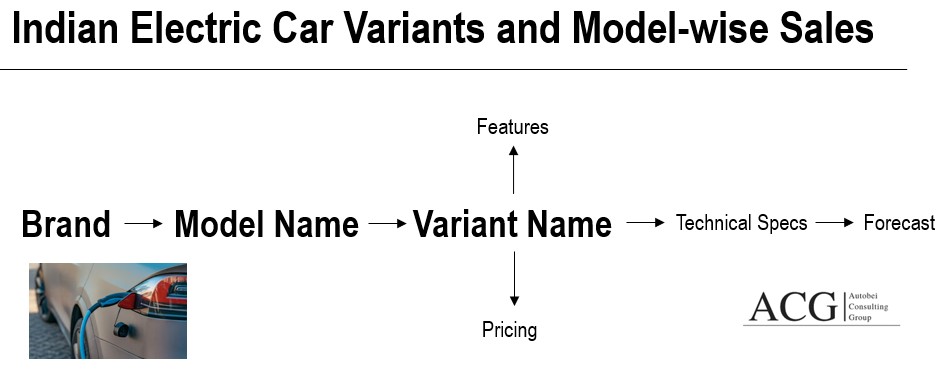
We have released the Indian Electric car model-wise sales data for 2020 to 2025, on a calendar-year basis. The forecast is available up to 2030. This data has a 100% accuracy and market coverage. The Model-wise sales data is not helpful because there are multiple variants with a wide range of prices, features, and specifications.

BYD and Vinfast car sales in India

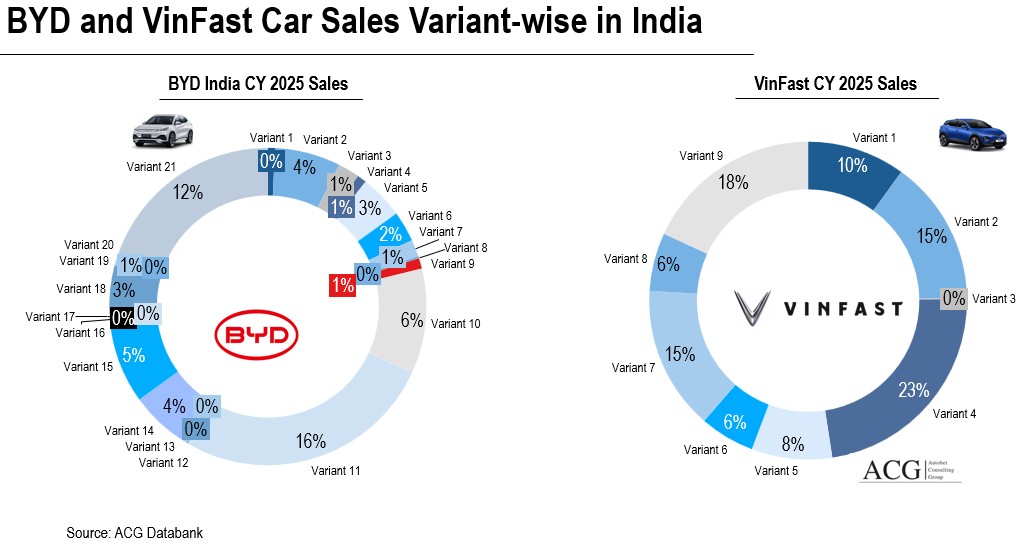
This data could be game changer for OEMs, Suppliers, and other stakeholders. The demand for which product specs and price range are trending and forecast. For example, in 2025, BYD had 24 variants in India, and only 3 accounted for more than 52% of sales. Tesla has a 2 Variants, but one variant is in demand. VinFast offers 9 variants, but 5 are in demand, with each model having a more than 10% share.

Indian Electric Car variants wise Sales Database

The benefits of having this database are:

  • Optimize product portfolio
  • New Product Launch Strategy
  • Who is winning the race based on features, Specs and Pricing
  • Elasticity analysis
  • Value proposition
  • Customer choice – Mapping variants with customer segment
  • Forecast demand accurately
  • Gap Analysis to launch new Model and Variants
  • Sweet price spot
  • Electric Car Business Case
  • Entry Strategy for India

The variants-wise data provide key insight of each models like:

  • Battery size
  • Price
  • Architecture type
  • Charging time
  • Range
  • Body type
  • Segment

The following Brands are included in this database:

  • Mahindra
  • Tata Motors
  • BYD
  • VinFast
  • Tesla
  • MG Motors
  • Mercedes Benz
  • BMW
  • Porsche
  • Hyundai
  • Kia
  • Volvo cars

BharatBenz Truck Strategy: The Road Ahead is the detailed report. DICV focuses on the Heavy-Duty Truck segment. Daimler India Commercial Vehicle Truck sales declined 5% in CY 2025 compared to CY 2024. The BharatBenz Medium Duty Truck segment registered 14% growth, the Heavy Duty Truck segment registered 4% decline, and the ICV truck segment registered 8.3% growth in CY 2025 compared to CY 2024.

Our Model- and Variant-wise Indian Truck Data is the source for this report. The Daimler India Commercial Vehicle Model-wise Sales Data is available separately for the years 2010 to 2015.

Pricing Strategy Analysis:

The company is focusing on the 250-horsepower-and-above truck segment. At the outset of its operations, DICV decided not to offer any discounts. However, the company is currently adjusting to the country’s culture and customer expectations. The price of the 3532CHX Tipper model in Jan 2026 is 60,79,000 INR, inclusive of GST. The RTO and other taxes are excluded. DICV is offering a discount of around 8-10 lakhs. The price after discount on the Tata 3532 TK Tipper Box body with radial tyres is 5,270,000 INR.

This price comparison provides useful insights into the Indian truck market’s price position and willingness to pay. Earlier, BharatBenz was 10-15% more expensive. In 2026, after the BharatBenz dealer’s discount, the price is lower than that of Tata Motors. However, the discount depends on several factors in the Indian Truck market. BharatBenz’s quoted price is still higher than Tata Motors’ in Jan 2026. These changes offer a deeper insight into how the Indian Truck market is evolving, Customer willingness to pay, and the role of brand image.
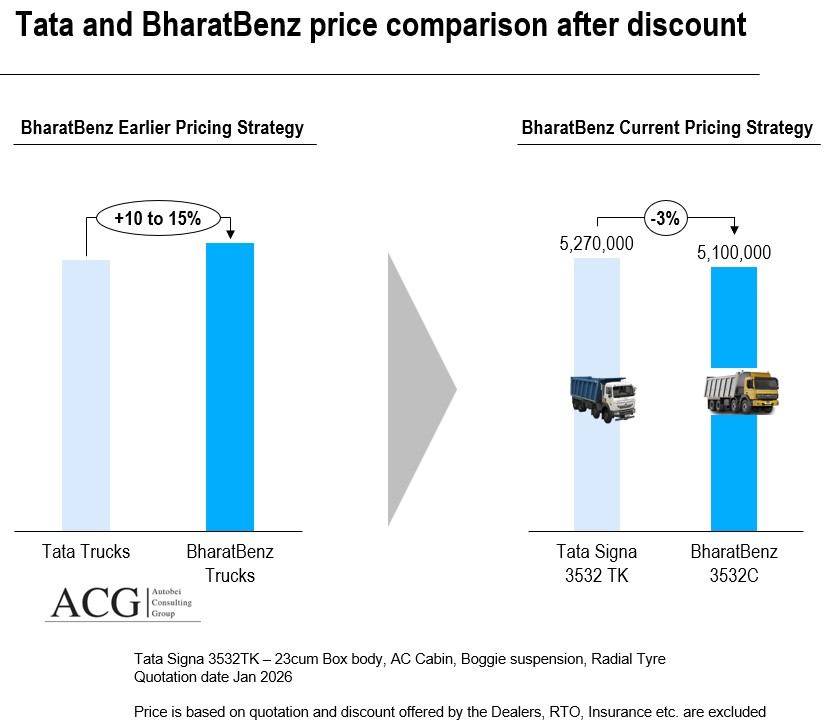
Tata and Bharat Benz price comparison after discount

BharatBenz launched 7 new Truck Models in 2020, including updated models to cover new applications. After 2 years of sales growth, the company launched 10 New Truck Models, including upgraded existing models.
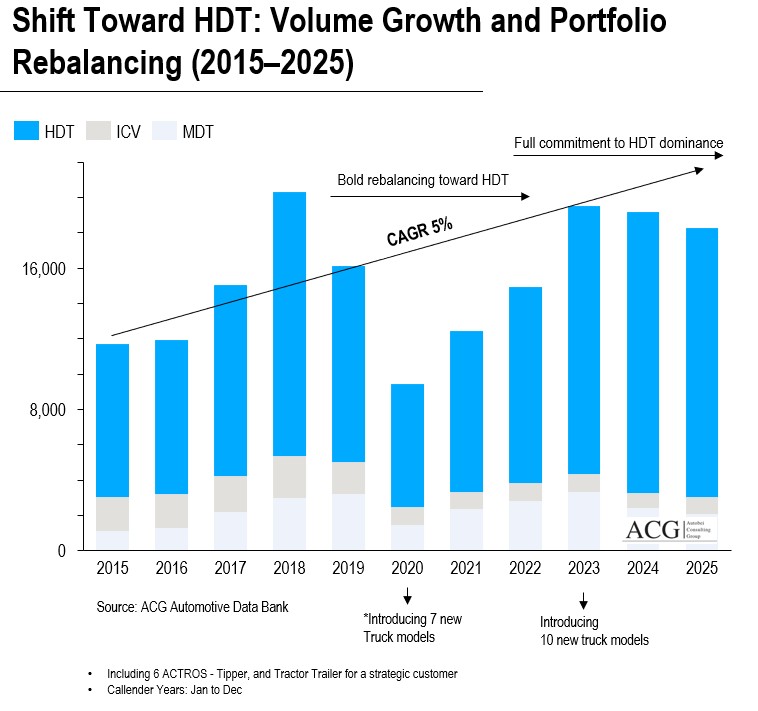
BharatBenz Truck Shift Toward HDT Volume Growth and Portfolio Rebalancing 2015–2025

From 2015 to 2025, around 70 DICV models were available. However, only 5 models account for the dominant share of Bharatbenz’s product portfolio in most of the years. The Sales move towards multi-axle models.
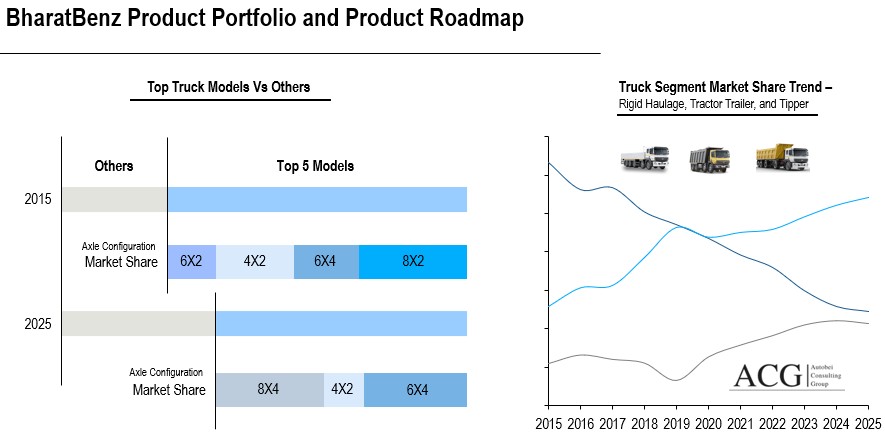
BharatBenz Truck Portfolio and Top 5 Sales Models 2025 - 2015

Among the truck segments, Tipper, Tractor Trailer, and Rigid Haulage market shares are moving in different directions. The Tipper segment saw 1% degrowth, while Rigid Haulage saw 9.5% degrowth, and the Tractor Trailer segment showed 7.9% degrowth in CY 2025 compared to the previous year.
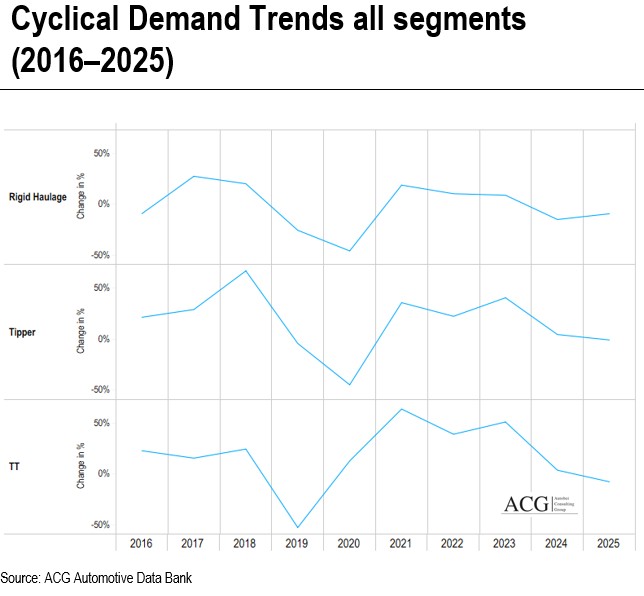
Daimler India Commercial Vehicle Tipper Rigid Haulage and Tractor Trailer sales growth and degrowth

Generally, all new CV OEMs target the large truck fleet owners for bulk sales. MAN, AMW, and Kamaz Trucks followed the same trend when they entered the Indian Truck Market. Daimler India Commercial Vehicles is following the same strategy. Now, BharatBenz is a well-known brand in India and has high product visibility on Indian roads. However, under this strategy, growth is constrained because Small and Individual Fleet owners are the largest segment.

Winning the trust of Small and Individual Truck owners is a different game. The Dealers, workshop, and mechanics all need to train according to their expectations and understanding. ACG recently conducted the Fleet Owner Survey on factors influencing truck-buying behaviour. Based on our survey, we have developed the Truck buying framework, which OEMs can implement to win the small and individual fleet owners.
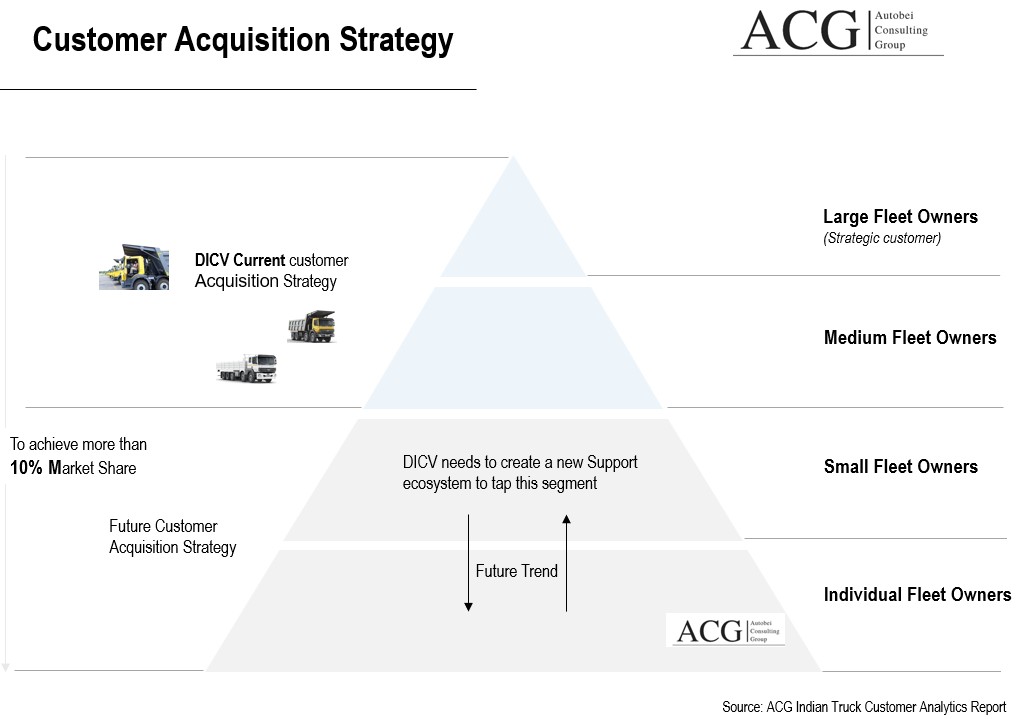
Indian Truck Customer acquisition strategy

ACG conducts customer satisfaction surveys periodically. We compared the survey results from 2015 and 2025. In many areas, the DICV has improved its ratings across key parameters. However, there is still a gap between customer expectations and DICV. Especially the interaction with some dealers.
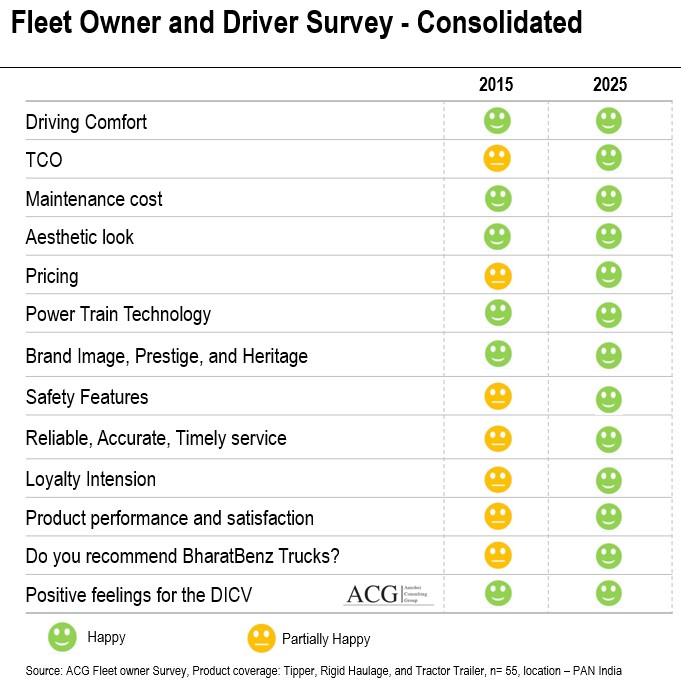
BharatBenz Truck Survey 2025

The DICV adopts a highly integrated approach. The Truck features, Technical specs, Price, and Brand strategy align.

The Brand and Product positions align with the customer segment and the applications of the Tipper, Tractor Trailer, and Rigid Haulage.

Tipper Segment: “Born of Mettle”:
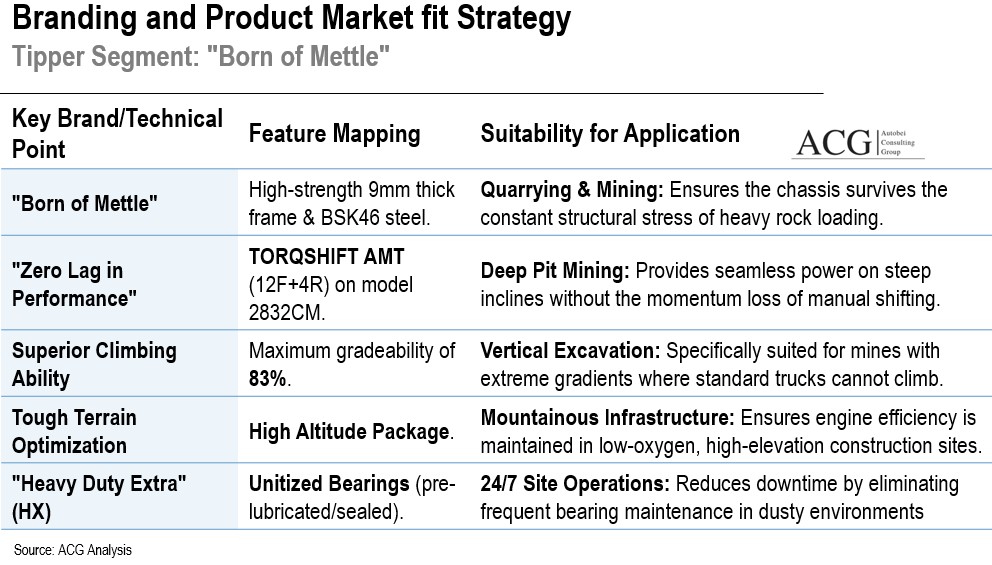
Product and Brand Strategy of BharatBenz in Tipper segment

The Tipper segment highlights durability, climbing power, and ease of operation in hazardous environments such as deep mines and mountain construction.

Tractor-Trailer Segment: “Revenue Maximization“:
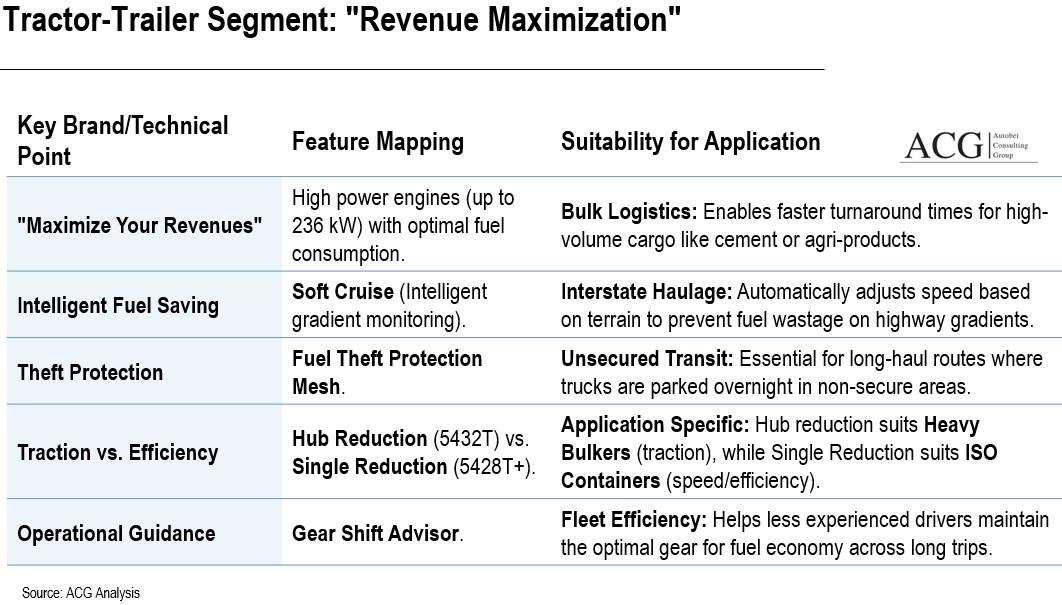
Product and Brand Strategy of BharatBenz in Tractor Trailer segmentSince the per-ton charges for truck or fleet owners’ tractor-trailers are more competitive than those for rigid haulage, the company is focusing on revenue. This is also one way to communicate about the TCO.

This can be achieved by providing better mileage, commitment to safety, Tracking, and high payload.

Rigid Haulage Segment: “Designed to Deliver”

Rigid Haulage is primarily used to deliver goods over long and short distances. Mileage and after-sales support are also key to on-time delivery.
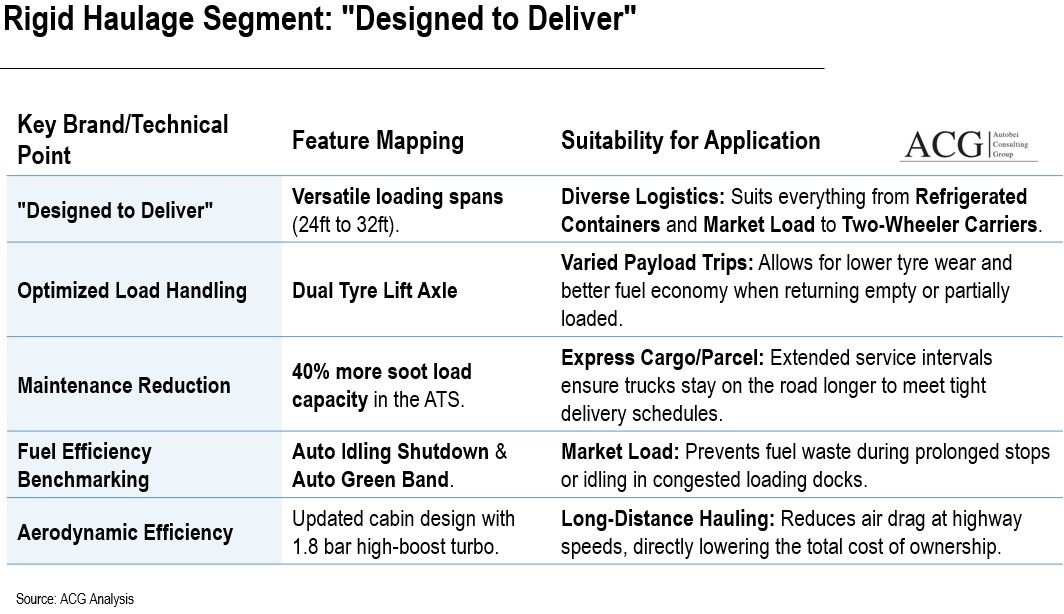
Product and Brand Strategy of BharatBenz in Rigid Haulage segment

Contact us at Info@autobei.com to get Model- and Variant-wise Sales Data and an Analytical Report.

Disclaimer: This is an independent analysis. All views are our own, based on our research and surveys. This is not an official statement from or affiliated with BharatBenz or Daimler India Commercial Vehicles (DICV).

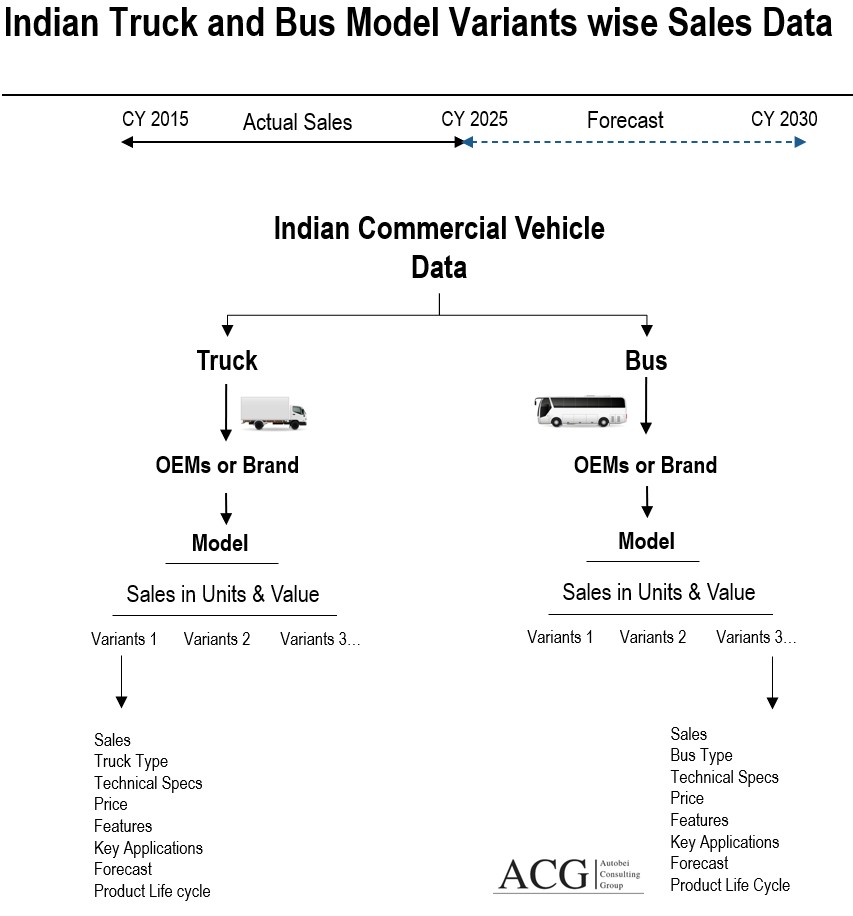
Indian Truck and Bus Model Variants-wise Sales Data is our exclusive data, which 100% market coverage. The data is available from CY 2015 to CY 2025. Model-wise sales help various stakeholders of the Automotive Industry, but having variant-wise model sales is extremely helpful. For example, based on Daimler India Commercial Vehicle sales, the BharatBenz Model 5532TT 4X2 BS VI sold 3 times as many units as the BharatBenz 5532TT 6X4 BS VI in 2025. The variants provide you with the exact information you need to create a successful product strategy that achieves sales goals. The differences in sales of models depend on the application, the growth of the application, TCO, and the willingness to pay for it. ACG maps this exclusive market intelligence through our application and truck-model-specific sales.

Indian Truck and Bus Model Variants wise Sales Data

In some OEMs, only a few models account for most sales, while others sell fewer than 100 units.

The Master Data covers:

Truck and Bus Segment:

  • Mini Truck,
  • Pick Up Truck,
  • Light Duty Truck,
  • Medium Duty Truck,
  • Heavy Duty Truck,
  • Mini Bus, Light Duty Bus,
  • Medium Duty Bus, and
  • Heavy Duty Buses
  • Fully Built Buses
  • Chassis

Body Types:

  • Tipper,
  • Rigid Haulage
  • Tractor-trailer
  • Special Applications

The stakeholders of the Indian Truck and Bus industry have exceptional following key insights of the Indian Commercial vehicle market intelligence:

  • The number of Truck and Bus models, including Electric Trucks, along with variants, launches every year
  • Discontinue Models and variants
  • Top Sales Models and their Applications
  • Top Models technical Specification, Price range, and Key features
    • Technical specification includes Engine type, Clutch, Wheelbase, Dimensions, GVW, Payload, Suitable applications, Gearbox, Axles, Tyre size and Type, and mapping to Fleet type buyers
    • Features like comfort, safety, Warranty, and performance
    • Top 10 Models, their market share, and growth

Key Benefits for several stakeholders

1. For OEMs

  • Brands: Ashok Leyland, Tata Motors, Mahindra, Eicher, Scania, Volvo, Maruti Suzuki, Force Motors, JBM, Olectra, SwitchMobility, Force Motors, Isuzu, Daimler India Commercial vehicle, Euler, IPL Tech, and Propel.
  • Product Strategy and Portfolio Planning: Determine which Truck and Bus models or variants, categorized by GVW, fuel type, cabin type, and Key application, are gaining or losing market share.
  • Demand Forecasting Analysis: Project demand for specific configurations, such as 6X4 or 10X2, BS-VI electric buses, and CNG variants.
  • Competitive Benchmarking: Watch competitor analysis, new model launches, best-selling models, Willingness to pay, or pricing strategies.
  • Lifecycle Management: Plan optimal timing to update or discontinue models based on sales trends.
  • Pricing Optimization: Decide your pricing strategy based on competition or create a better value proposition to increase profit
  • Regional Strategy: Analyzing dealer inventory and marketing strategy or budget with high-demand for specific models, such as tipper variants in mining or school bus models in urban areas.

2. For Component and Equipment Suppliers

  • Manufacturing Planning scenario: The expected demand for various models based on vehicle GVW, Model, and Type is mapped.
  • Product Development: Strengthening R&D capabilities with CV high-growth segments, including components for electric buses and CNG trucks.
  • Customer Mapping: Identify growing OEMs and models to prioritize sales efforts.
  • Aftermarket Strategy: Estimate spare parts demand based on model age and sales volume.
  • Equipment suppliers like Tipper, Trailer, Transit mixer, Crane, Tip Trailer, and Boom pump can optimize their product fit and engineering.

3. For Investors & Private Equity Sector and Company Analysis:

  • Evaluate each OEM or supplier based on model-level performance and future product pipeline.
  • Identifying Growth Segments and Sub-segments: Identify high-growth segments or the largest market size segment, such as Tippers, electric buses or Trucks, and LNG trucks, for potential investment.
  • Risk Assessment: Evaluate exposure to declining segments, such as diesel medium-duty trucks.
  • Startup Business Plan: Assess market size and relevance for startups in electric Trucks and Buses, Telematics, or fleet solutions.
  • Fleet management software and solutions providers

4. For Financial Institutions & Insurance Companies

  • Resale Value Modeling: Calculate depreciation curves for each model and variant to inform used-vehicle financing decisions. The Financial companies or banks can also be flexible on the terms and conditions of the top models

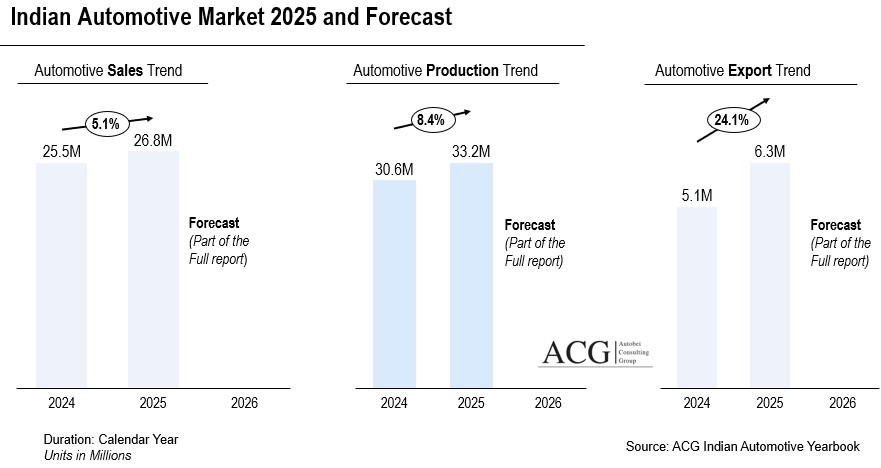
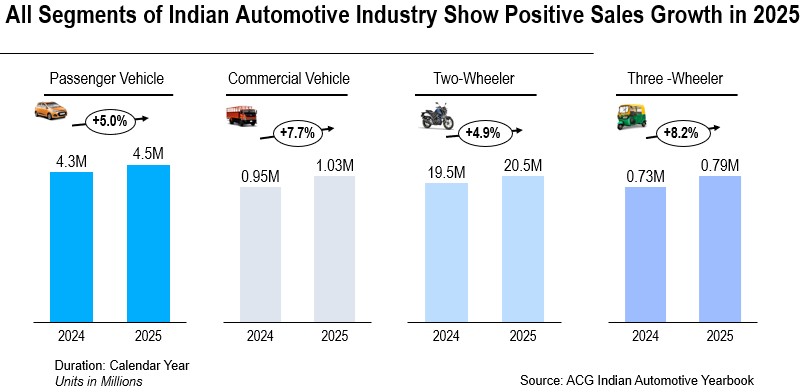
The Indian automotive market recorded 5.1% sales growth in 2025 compared to 2024. The Indian Automotive Production registered 8.4% growth, and Export registered 24.1% growth in 2025. The maximum export growth comes from Commercial Vehicle, Mopeds, and SUV, MUV exports.

Indian Automotive Market 2025 and Forecast 2026

The forecast for the Indian Automotive Industry is excellent growth, supported by strong economic growth, increased purchasing power, New model launches, and Government spending on Infrastructure.

Q4 of 2025 played an important role in driving the Indian Automotive Sales, Production, and Export. The Indian Light Duty Bus segment showed 39.2%, the Indian Scooter segment 26.1%, and E-Card sales showed 40% in Q4 2025.

Combined sales of Indian Cars, SUVs, MUVs, and vans were 4.5M. After considering the luxury and premium segment, the total reached 5M units in 2025.  Indian commercial vehicle sales grew 7.7% to 1 million units in 2025. Both the Light Duty Truck and MHDT truck segments registered more than 7%. Since the heavy investment in Public infrastructure projects like roads and Highways, and the logistics segment’s demand, are key drivers of CV growth. Our exclusive Model-wise Application-wise Data provides in-depth market intelligence that shapes the future of the Indian Truck Industry.-

Indian Car Truck Bus Two Wheeler and Three Wheeler Sales 2025

The Indian two-wheeler market, especially the scooter segment, is in high demand due to strong customer sentiment. Along with the Urban, rural demand was also high in 2025 due to good monsoons and the MSP support price.

Get a detailed report with a Monthly Subscription

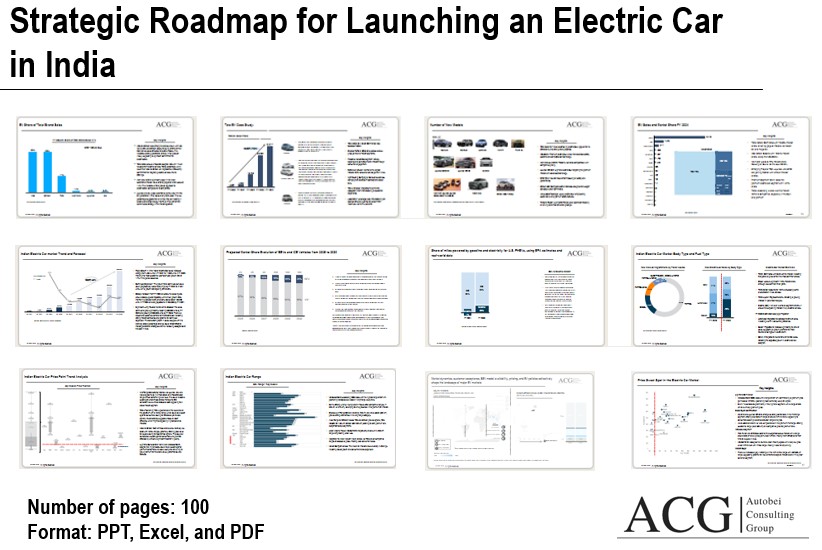
We have prepared detailed plans for designing an Electric Car Entry Strategy for the Indian Market. Various Market dynamics have been considered in this strategic GTM report. OEMs, Suppliers, and Charging Infrastructure are ready beyond 2030. The Electric Car market will offer a desirable option across almost all segments.  Having the strategic blueprint for the Electric Car in India ensures success, drives cost savings, establishes the brand, and achieves the desired results. The Entry strategy is supported by our exclusive model-variant sales data for electric cars.

We analysed why customers are buying the Tata Nexon, MG ZS EV, BYD Atto 3, Citroen eC3, and Mahindra XUV 400 EV models. How Maruti is positioned to gain a firm grip on the Electric Car in India and its launch strategy.

VinFast launched new models at attractive prices and adopted a multichannel sales approach.

How to Design an Electric Car Entry Strategy for the Indian Market

For example:

  • Current and Demand Forecast of Electric Cars in India
  • Electric car market size and growth forecast
  • Factory setup cost analysis
    • Assembly, Components, MANpower, Software, etc
  • Electric Car Technology
  • Electric Car Product Strategy:
    • Product Position and its mapping with the value proposition
    • Product Portfolio
    • Product Market fit
  • Current Electric Car Models and expected new models:
    • Price range: Affordable, Premium, and Luxury
    • Battery capacity
    • Range
    • Charging time
    • Architecture type
    • Type of the vehicle – SUV, Cars, and others
    • Indian Electric Car Competitor Landscape – Sales, Market Share, Growth, USP, Sales Strategy, and Technology
  • Customer Analytics:
    • Buyers expectations
    • When they want to change from an ICE to an Electric car
    • First-time buyers
  • Charging Infrastructure:
    • How to face the charging infrastructure challenge
    • How to win the trust of the customer on range anxiety

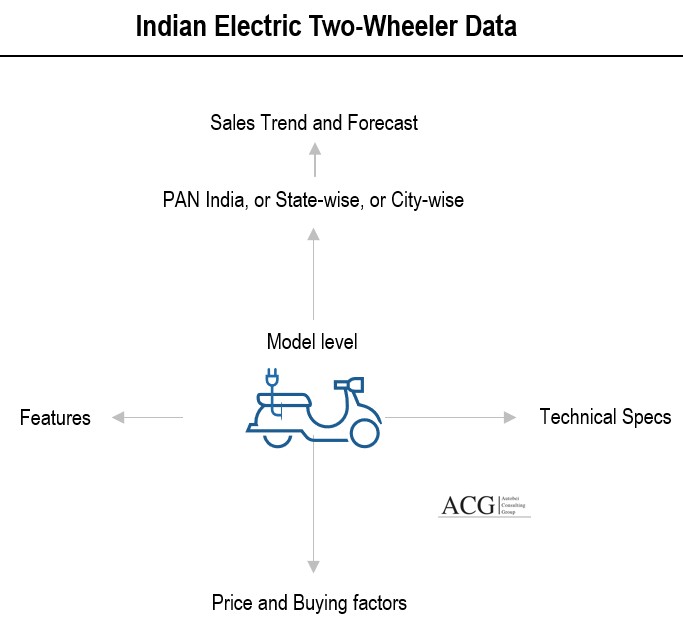
City, State, and Model-wise Electric Two-Wheeler Data is available with us.

Market Strategy and Product Strategy: This data helps Electric OEMs’ entry and product strategies. It also helps OEMs with Marketing planning, Strategy, Branding Strategy, buyer target group, and advertising planning.

Model and City wise Indian Electric Two Wheeler Data

Production planning, Inventory, and Supply Chain Strategy: Production planning is critical for any OEM. Such current and future demand helps to produce a production plan and a New Product launch. One data point provides a demand forecast up to 2030. Based on the estimates, OEMs can secure the supply chain components.

Competitive Benchmarking: Track competitors’ sales and which model specs are popular in each geographic region. Buyers’ willingness to pay can also be tracked and reviewed to inform pricing or value proposition.

Specs and features: Battery size, battery type, range, charging time, Digital features, and Others

Investors or Financial Institutes: Provide deep market intelligence, including penetration of the Indian Two-Wheeler market, ROI, support for investment decisions, and Future demand. Reduce the risk of the investment. Invest in a model with a higher likelihood of market penetration.

Network Strategy: Dealer network and charging infrastructure. Having state- and city-level sales data for specific states or cities helps prepare the appointed dealers and invest in a better-charging network or even swappable batteries for the most demanded models.

Other kinds of firms, like Research and Consulting and Insurance, can also benefit from having such data.

Check our Monthly Subscription Here

Why India’s Future Freight is Electric is a detailed monthly report on Key Insights on the Indian Electric Truck Market. After the festive season, the Electric Truck sales declined by 13% in November 2025 compared to October 2025. However, compared with the same month last year, it showed excellent 207% growth.

Indian Electric Truck Market Nov 2025

Ashok Leyland Electric Truck sales are highly volatile in 2025. Propel now ranks among the top 6 OEMs in this segment, with 2% market share. Switch Mobility, the small electric truck, has made its presence felt with 2 Models. IPL Tech is working hard to make its vehicle suitable for various new applications.

Energy in Motion is supported by Chinese OEMs Beiqi Foton. The company has launched a Truck in the Heavy Electric Truck segment, featuring a battery-swapping option. The sales number looks good over the last 3 months. SANY, another Chinese Truck OEM, is also penetrating the Indian Truck market in the heavy-duty truck segment. QUCEV sales declined, but still, the future looks highly attractive for this brand.

Recently, Blue Energy, a team of AMW trucks, received significant media coverage for its launch of a new electric truck. The company successfully sold its new truck to large logistics companies.

Our report and database provide an in-depth analysis of the Indian Electric Truck segment.

How Tata & Mahindra Redefined Themselves as Car Brands is the most inspiring Analytics report on the Automotive Industry.

How Best to manage brands for profit on every sale of the vehicle? It comes from our analysis: willingness to pay more for your brands, even when competitors are cheaper. So, what is the reason that customers are willing to pay more? Because of the trust and bond you created over time in the customer’s minds. Now the question comes, how to win the customer’s trust?

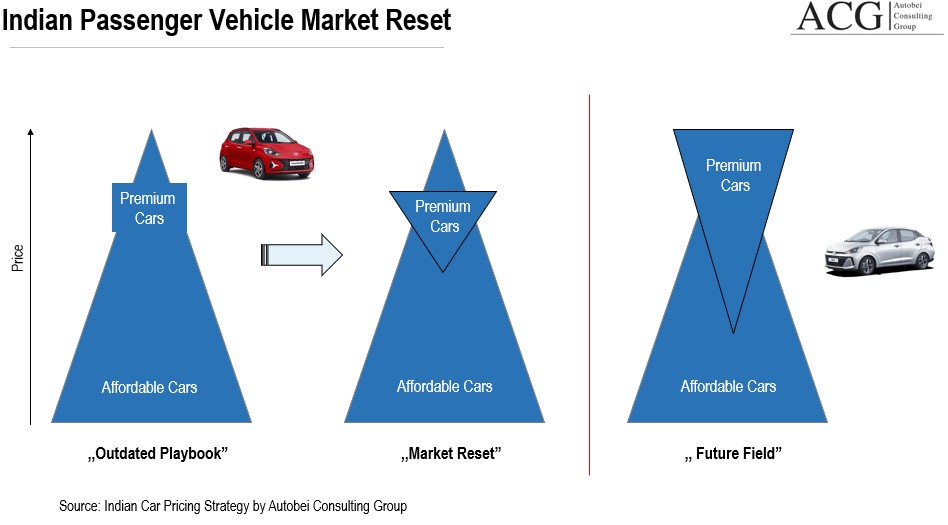
With the growing purchasing power of Indian Buyers and their willingness to pay for premium cars like the Harrier and XUV platform, the car segment moved into a Market reset.

Indian Car market segmentation

Tata Motors and Mahindra were able to achieve (1) a point of difference simultaneously on
performance and Technology, and a point-of-parity on perceived luxury with respect to luxury cars, and (2) a point-of-difference on perceived luxury and a point-of-parity on performance and Technology with respect to performance cars.

Tata Motors and Mahindra are now ruling the roost among car buyers in India. Once, Tata vehicles were used in the Taxi industry, such as the Tata Indica or Sumo. Exceptionally, the Tata Safari and Tata Sierra had a different customer base. Now, Tata cars and SUVs are the favourite choice to drive.

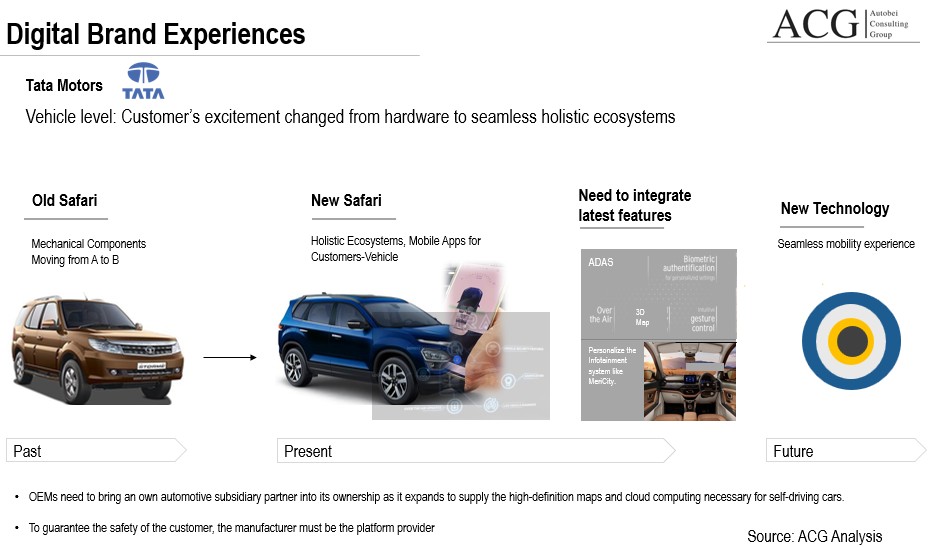
Tata cars Digital Brand experience

The goal of this study is to learn how the Tata and Mahindra brands created and dominated new subcategories and why competitors stood by and watched. Another prospect of this study is how OEMs such as Volkswagen, Renault, Nissan, and Skoda can adapt their brand strategy to win customers’ hearts and minds.

In 2022, Mahindra made a big bet on Electric car technology by launching the XUV 400 EV. In 2024, another big bet on another electric car for Indian customers.

Tata Motors expanded the EV technology to other models, such as the Safari, Harrier,  and Punch, after launching the Tigor EV in 2017. Also, the Harrier enhanced Tata’s position as the most innovative brand in India.

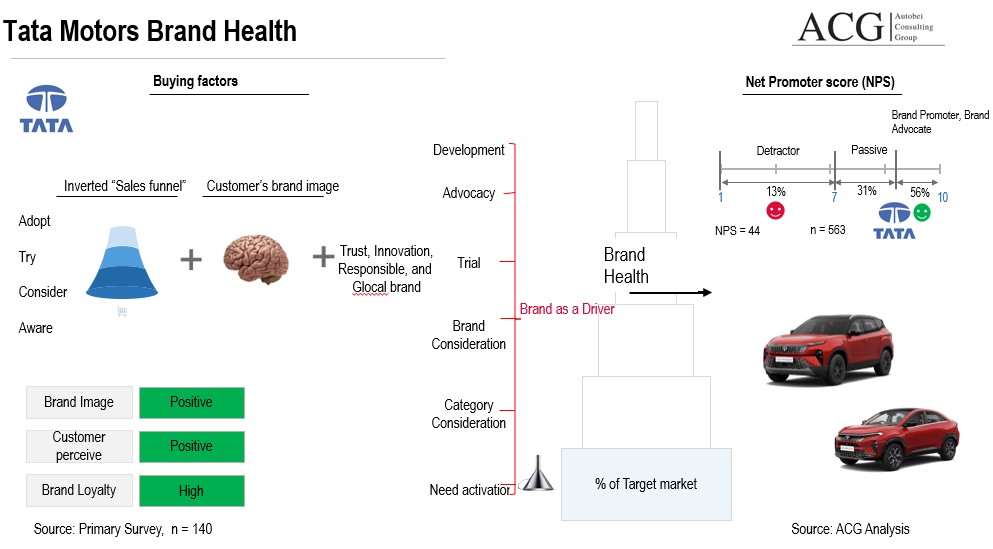
Tata Motors Brand Health Analysis and buying factors

Mahindra and Tata observed that car owners in India were becoming more mature and affluent and challenged their organizations to “create a luxury car to challenge the very best ”—a challenge that led to the XUV, Safari, Harrier, Altroz, Curvv, and other models.

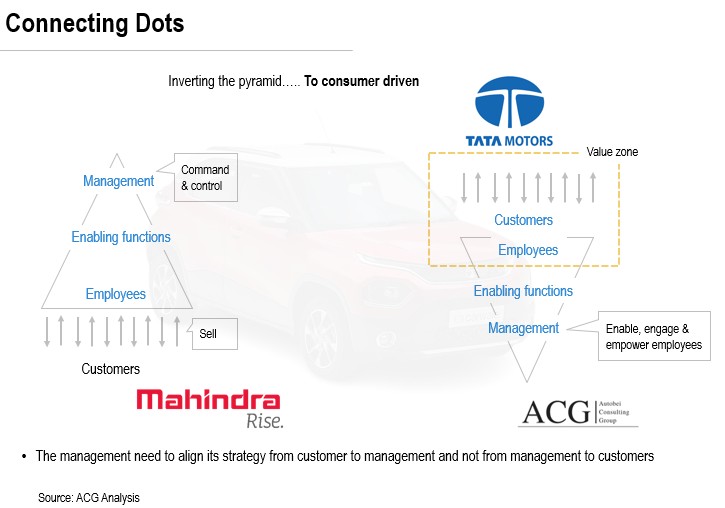
Tata and Mahindra Organization strategy for branding

Mahindra and Tata integrated innovative features and improvements to make their USP to meet customer expectations.

Tata and Mahindra provided not only functional benefits but also the self-expressive benefit of doing something about the energy and global warming crises.

In 2024, over half of the Mahindra and Tata buyers in our customer survey expressed that the main reason they purchased the car and SUV was that “ it makes a statement about me”.

Brand Position: Tata Motors and Mahindra

Both companies changed the promise of their brand from Economy to premium luxury car. Tata and Mahindra understood that the brand is not just a company communicating or telling buyers or the market what it is. But what one customer is speaking to others about these brands.

Indian Buyers want to feel positive about both Brand experience, such as Brand Smell, Social, Feel, Engagement, Love, Think, and Emotion. It is not the same as we consider Volkswagen or Nissan on the scale.

It’s not only product performance or attributes. Brand is your friend. To win a friend’s trust, you must earn it; if the customer considers you a friend, you are already trustworthy. You are not only aware of the brand, but you also know how it fits into your world.

Just saying: Brand positioning does not deliver the expected results, but Experiential brand positioning works and delivers exceptional results.

Similarly, only the Brand promise line does not impact the buyers, but the Experiential brand Value Promise builds trust.

Mahindra uses Ingredient branding in the promotion; however, Tata uses Ingredient branding indirectly to win the buyers’ trust.

Key Highlights of the report:

  • What is the brand for Indian buyers
  • How to build the brand
  • Relationship between Product, Brand, and Customers
  • Design the brand strategy to win the market in a short time
  • Customer journey of various customer segments
  • Post-merger Brand Strategy, case study of MAN-Scania merger
  • What are the different brand attributes, and how do they impact buying decisions
  • Identifying and developing brand plans
  • Designing and implementing brand marketing programs
  • Measuring and interpreting brand performance
  • Growing and sustaining brand equity


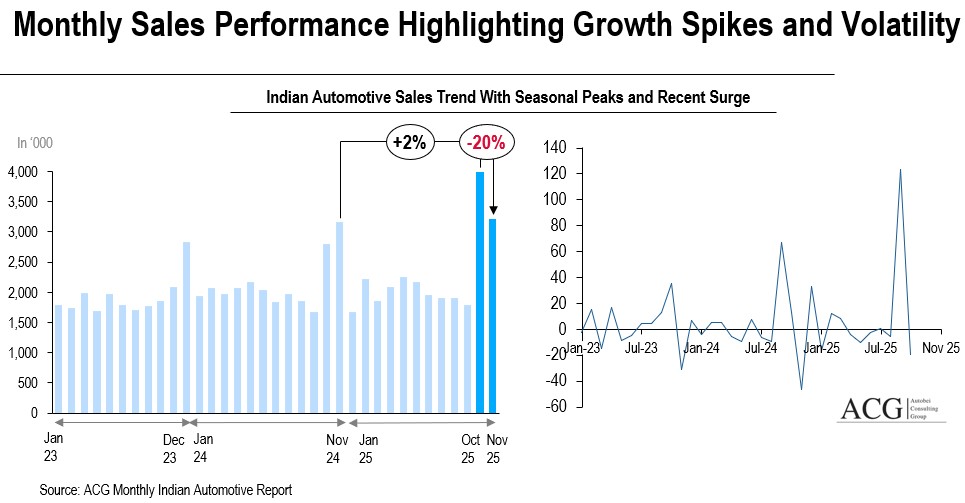
Indian Automotive Sales Report Nov 2025 is part of the monthly report subscription. Indian automotive sales declined by 20% compared to the last festival month. It was expected that a market correction would happen in November 2025. However, compared with November 2024, sales increased by 2% in November 2025.

Indian Automotive Monthly report November 2025

The changes in monthly sales follow a zigzag pattern because each month, the dynamics work differently, affecting the Automotive Industry differently.

The impact of GST 2.0 is visible across all segments. November 2025 was the second-highest month since January 2023. In Q2 FY 2026, India registered the world’s fastest GDP growth of 8.2%. It shows the strong fundamentals of the Indian economy and sentiments. The Indian Automotive Industry will also have benefits. Indian OEMs and component suppliers are continuing to expand their business through the acquisition of foreign firms in Europe, the USA, and other parts of the world.

Get the Monthly subscription report and Data on the Indian Automotive Industry:

The Indian Truck and Bus Tyre customer Survey is the latest study based on primary interactions with customers, and products differ in many ways from traditional buying habits. ACG has expertise to check the pulse and track the Tyre market and insight dynamics. We are in touch with 30K truck fleet owners across various types.

The application of the Truck and Bus is the key to selecting the tyre type and brand. The Truck Application-wise data covers Overload and payload truck-use pattern data.

The survey discloses the brand image and reputation of the Tyre brands like

  • MRF Tyre
  • JK Tyre
  • CEAT Tyre
  • Bridgestone Tyre
  • Michelin Tyre
  • Apollo Tyre
  • BKT Tyre, and
  • Chinese Brands

Indian Tyre Brand and Go-To-Market Strategy:

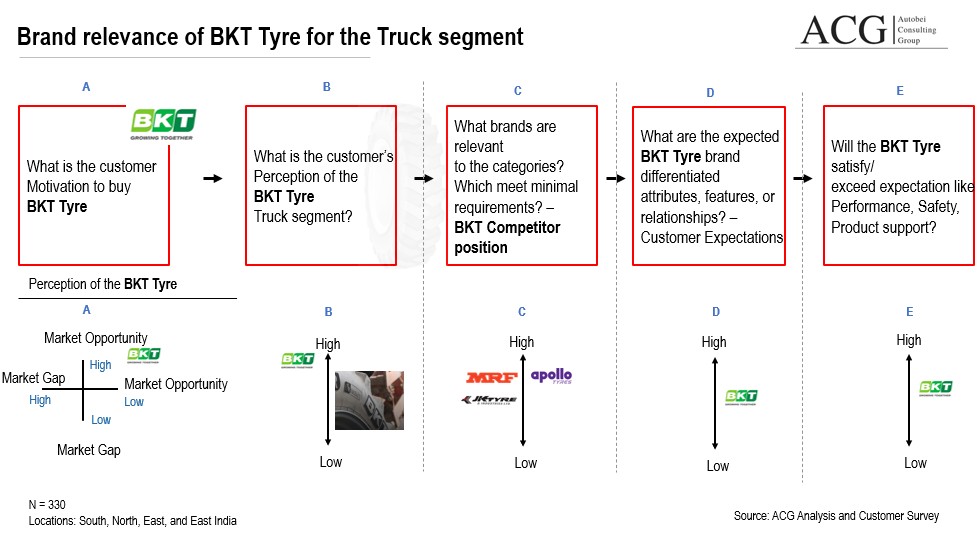
This tyre brand image directly affects purchase decisions across the various fleet-owner segments. BKT tyres Brand is highly relevant among fleet owners, especially in the Tipper segment. Below is the Brand relevance map of BKT Tyre:

BKT Tyre Brand relevance for Truck Tyre

This survey helps to define the target segment for various tyre sizes and types. Most of the fleet owners tried to find new entrants like BKT Tyre in this segment. BKT Tyre is already the leading player in off-road heavy vehicles. Leading players like MRF and Apollo Tyre are also facing image issues, as most fleet owners have been using these tyres for a long time.

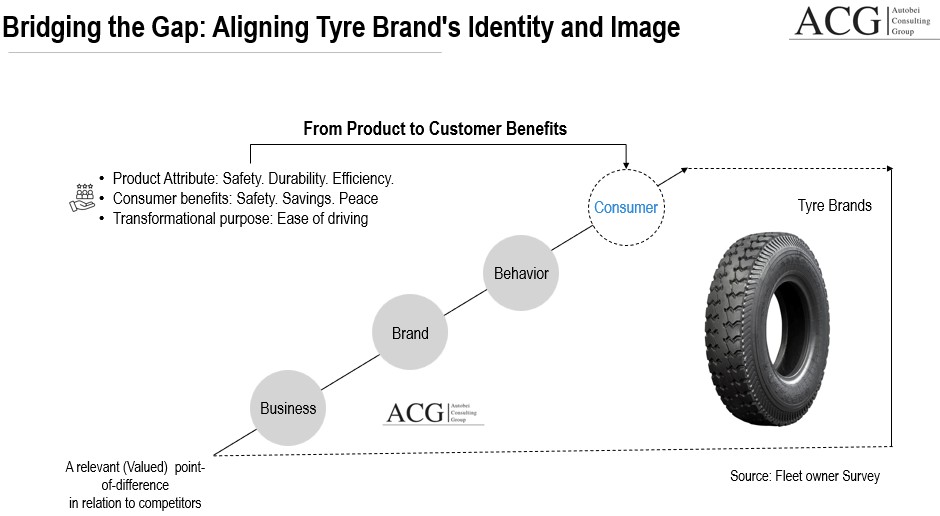
Tyre Buying Behaviour: Tyre Brand Identity and Image

Since use, Replacement cycle, Business model,  and load patterns differ, the purchase journey is also different for the Truck and Bus segments.

JK Tyre has a strong identity for its quality in the radial Tyre segment. Apollo and MRF are known for a balance between Price and performance. The Truck Tyre replacement market is evolving rapidly. Customers are looking for a competitive price, but long life and after-sales support from the tyre manufacturer. Companies like Continental Tyre decided to leave this segment due to high costs, dealer networks, and limited engagement with fleet owners.

Indian Tyre Brand Strategy

It is key to understand the challenges, buying criteria, customer engagement, relationship-building, and competitive offerings across various customer segments. Our latest survey decoded it.

Willingness to Pay:

Brand reputation and trust play a significant role in fleet owners’ willingness to pay. Price is an essential attribute in the Tyre segment, as multiple tyres need to be replaced during a specific cycle. However, for Small and Medium fleet owners, payment terms and customer relations are highly valuable in the Indian Tyre Industry.

Fleet owners with premium fleets, such as Volvo long-haulage, prefer Michelin Tubeless Tyres because they offer better returns and a strong value proposition, even though they are more expensive than other brands. The customer still believes they could prefer Bridgestone tyres or consider it under the first filter, Brand relevance, if this brand meets certain expectations.

Only 20% of fleet owners consider driver opinion before buying tyres; however, drivers have a fair idea of tyre quality and performance. But they do not have price and discount information.

Tyre Dealers are one of the most influential if they they a multi-brand dealership and the owner type is driver cum owner.  Some dealers are heavily promoting Chinese brands in India by offering attractive discounts and guaranteeing tyre reliability and durability.

The challenges and opportunities have been identified through this survey for Tyre Brands companies.

Some of the questions as part of the Indian Truck Tyre survey:

  • Why fleet owners buy: MRF Tyre, JK Tire, CEAT Tyre, Bridgestone Tyre, Michelin Tyre, Apollo Tyre, BKT Tyre, and Chinese Brands
  • What is the price point they are expecting
  • Who is the decision maker
  • Application of the vehicle and load pattern
  • Choosing between Radial and Bias tyres
  • Brand perception of the different tyre brands
  • Customer loyalty
  • Tyre purchase plan

Survey Participation:

  • Fleet Owners – Truck and Bus: Owner cum drivers, Small, Medium, Large, and Corporate
  • Truck drivers: All types of drivers
  • Types of Trucks: Tipper, Rigid Haulage, Tractor Trailer, and Special Truck Type
  • Truck segment: Mini, Pick up, Light Duty Truck, medium Duty Truck, and heavy Duty Truck
  • Other: Procurement managers of Fleet or logistic companies and OEMs procurement managers
  • Tyre Dealers of all major cities

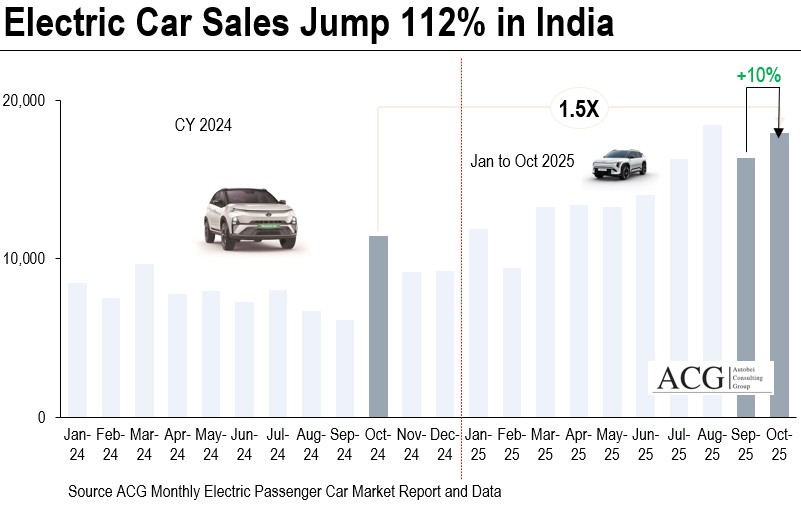
How Indian Brands Are Dominating India’s Electric Car Market is a detailed Monthly Market report. Indian Electric Car Sales registered 57% in October 2025 compared to the same month of the previous year. In the last 22 months, the Electric Car market in India has grown by 115%.

Indian Electric Car Sales in India in October 2025

In 2025, sales are increasing steadily, with moderate month-on-month fluctuations. There is strong positive customer sentiment towards electric cars.

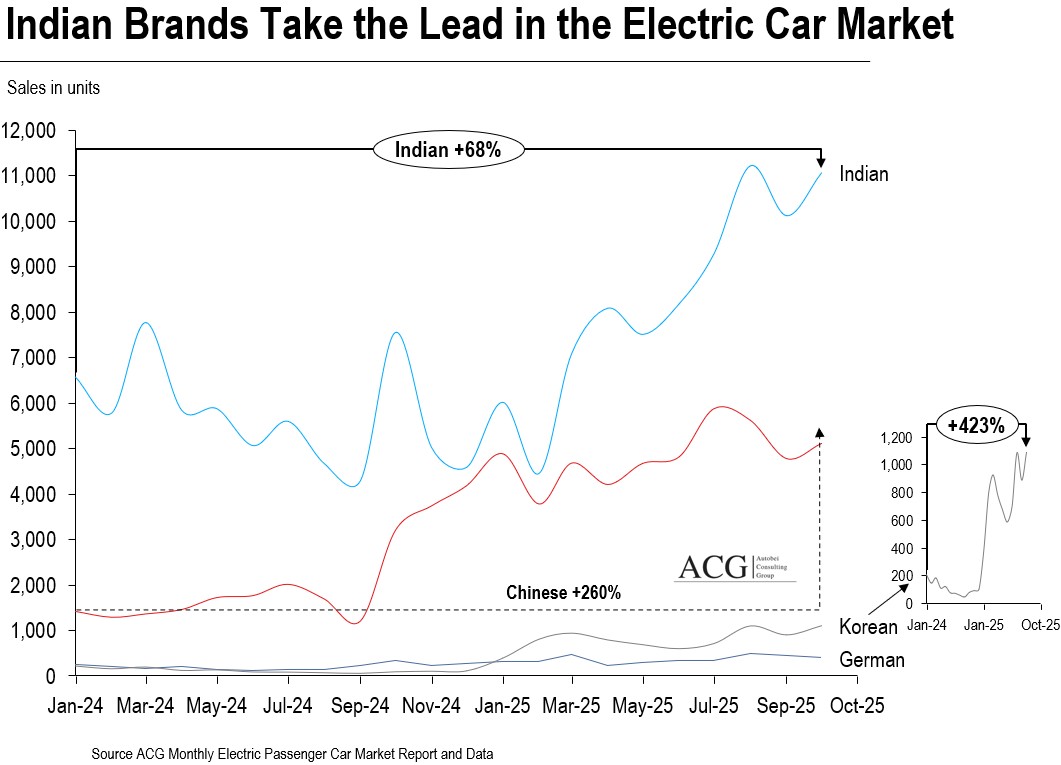
Indian Brands like Tata and Mahindra are dominating the Indian Electric Car market. The new models, emotional bond, and product-market fit are among the key reasons behind this trend.

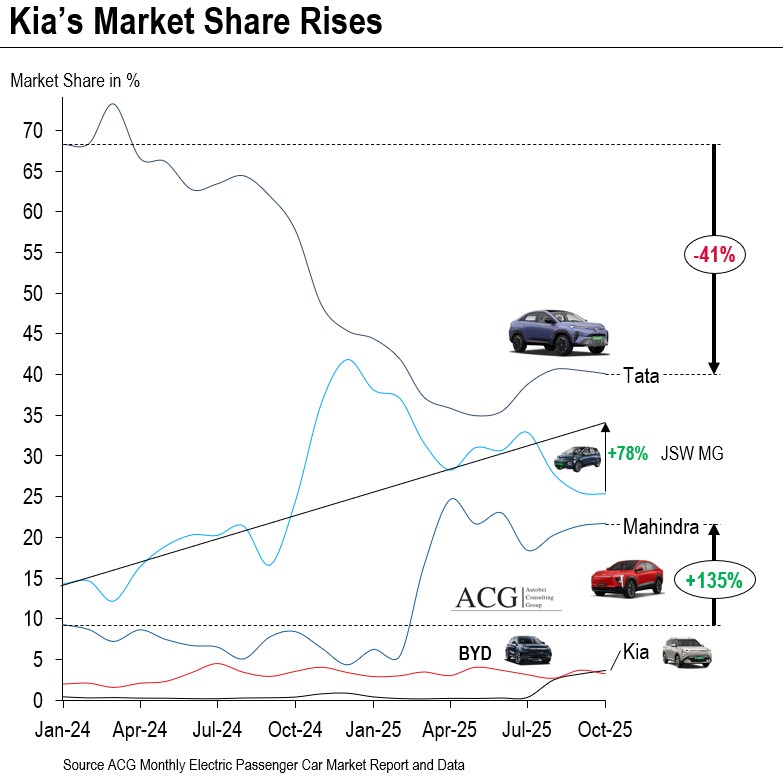
Indian Electric Car brands registered 68%, Chinese 260% and Korean brands’ sales grew by 423%. Indian Brands lost 12% of their market share, while Chinese brands gained 12%, including JSW MG.

Indian Chinese Korean and German Electric Car brands sales trend in October 2025

Tata Motors’ market share slipped from 68% to 40% over the last 22 months due to competitors launching new models in the same segment. Mahindra, JSW MG, and Kia gain market share with a moderate zigzag pattern.

Brand wise Indian Electric Car Market Share October 2025

Porsche, Audi, Mercedes, and BMW could not align with market trends, resulting in almost stagnant market share.

Tesla sold 109 Electric cars in September and October, and Vinfast also crossed 100 in a single month’s sales. Hyundai Electric car sales increased by around 2X compared to Jan 2024.

Volvo Cars, which was leading the conversion of its portfolio to electric cars, saw sales decline by more than 50% from January 2024 to October 2025.

Since the Monthly Market track is essential, check our monthly Electric Car Market Tracker here.

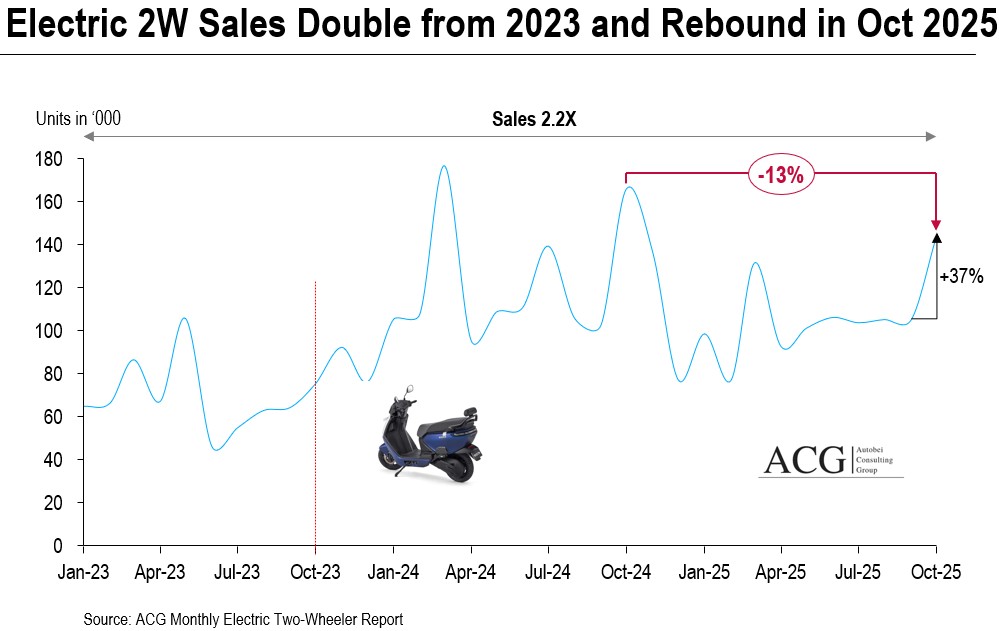
Indian Electric Two Wheeler sales grew by 37% in October 2025 compared to September 2025. But the sale of the Electric Two-Wheeler decreased by 13% compared to the same month last year.

The Electric two-wheeler market doubled in October 2025 compared to the first month of 2023. Monthly sales were highly volatile, but the industry is showing attractive long-term growth. The festive season was a key driver of the 37% sales growth in October 2025.

The long-term forecast will register double-digit growth.

Indian Electric Two Wheeler Sales October 2025

Competitor landscape:

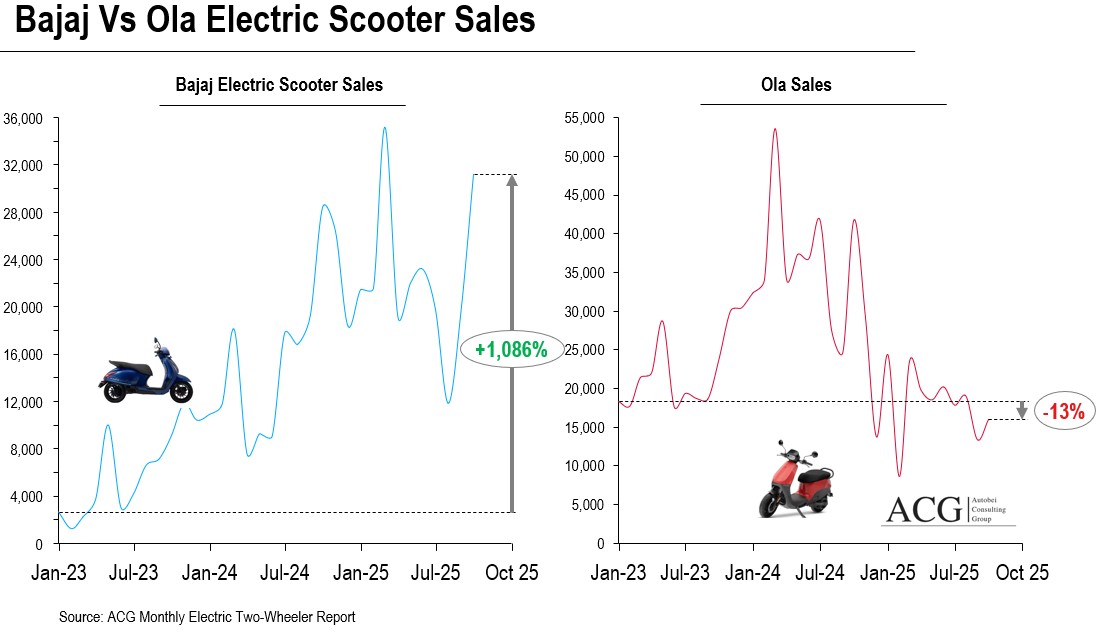
Bajaj Auto Scooter has a robust product and is reliable in its category. This provides a safe, confident ride. Its body is metallic, giving stability.

Bajaj Electric Scooter sales and Ola Scooter sales in October 2025

On the other hand, Ola Scooter sales continue to decline due to various factors, including poor after-sales support and competitors’ new model launches. Social media was flooded with negative customer support issues with Ola.

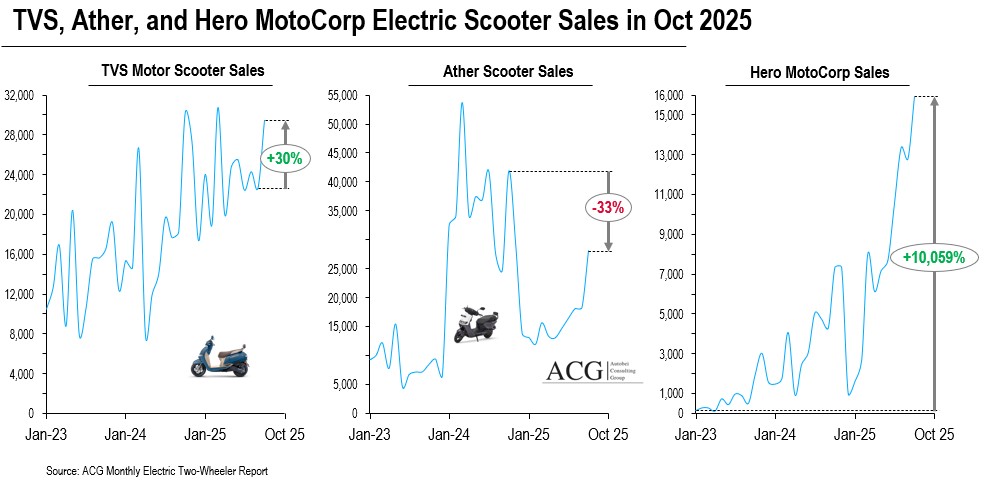
Ather and TVS and Hero MotoCorp Electric Scooter sales

Ather and TVS Motors have different product USP and lead in some specific segments. Ather sales decreased by 33% in October 25 compared to October 24.  Ather also has clarity on the product road map. Due to TVS’s dense network, TVS successfully penetrated even rural areas in a short time. Young buyers in urban areas prefer Ather.

Hero MotoCorp has shown consistent sales growth over the last 34 months. This is because it’s a balance between price and features offered to the customers.

Other players like Greaves Electric, BGAUSS, PUR Energy, RIVER Mobility, Revolt, and electric Two-Wheeler sales increased continuously for more than 2 years.  Kinetic has received significant funding from investors, but it could still perform like other players.

Subscribe to our Monthly Indian Electric Two-Wheeler Market Insight Report. Check the Monthly plans here.