The Indian Truck Industry showed 13% growth in FY 2026 compared to FY 2025. Due to demand in Construction and Mining applications, Tipper registered 11.7% growth.  There was increased demand in E-commerce, Agricultural Products, and FMCG. The largest Tipper segments are 6X4 and 8X4 axle configurations with engine power above 200hp.

The Rigid Haulage showed 14.2% growth. Due to demand for 55T in applications such as steel and cement, the Tractor Trailer closed FY 2026 with single-digit growth compared to FY 2025. 10X2 and 6X2 are the largest segments within Rigid Haulage due to their favorable TCO and payback periods.

Application is the key and backbone of the Truck Industry. The next most important dimension is the segment. If the Suppliers or truck OEMs can find a closely aligned segment that can fit multiple truck segments, and vice versa.
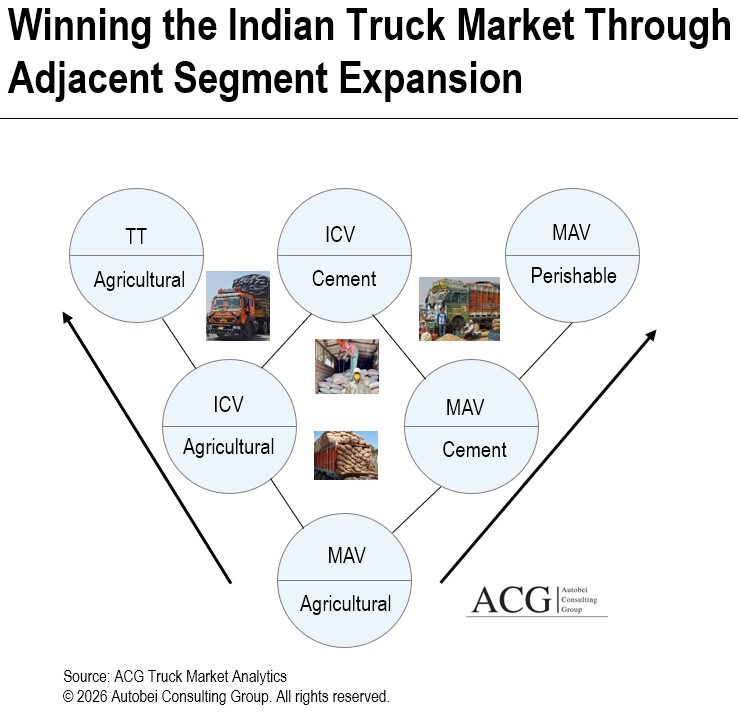
Indian Truck segment and Application wise Strategy

Light-duty trucks and medium-duty trucks were in demand as drivers began to own their own trucks, single-driver driven, Lower toll, easy to get a load, and became single-fleet owners, and demand increased in regional transportation.Indian Truck Competitive Analytics Dashboard
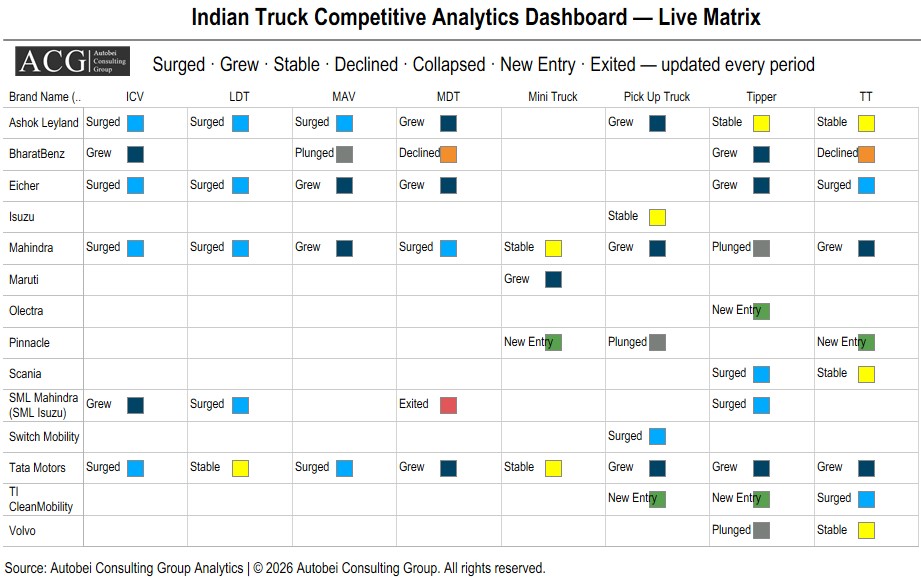
The Operating costs are low in the LDT and MDT truck segments. Models like the Eicher PRO 2110 are popular among Small and single-fleet owners. Eicher, Mahindra, and Ashok Leyland are the key leaders in this segment because their product ranges meet market requirements.

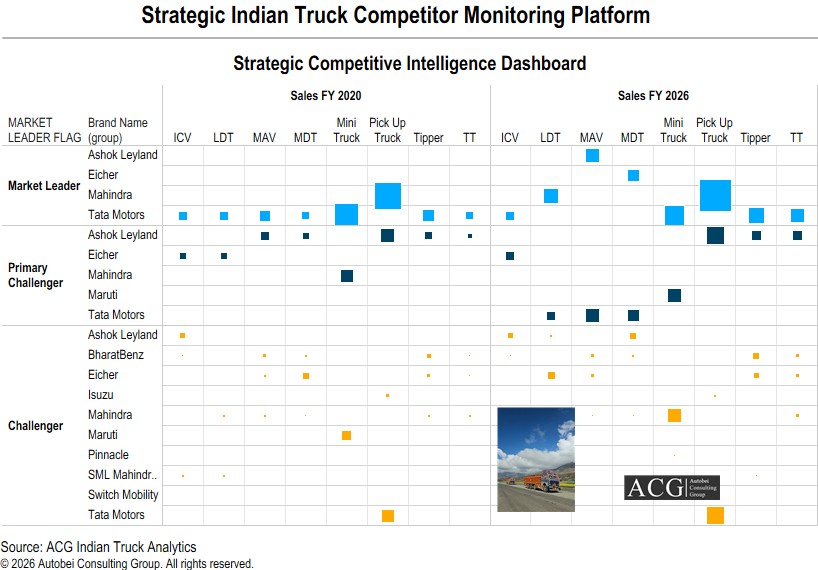
Indian Truck Competitor Position:

There are significant changes in the segmental leadership position of Tata Motors in FY 2026 compared to FY 2020 because new truck models were launched by Mahindra, Ashok Leyland, and Eicher.
How to win Indian Truck Market

We have developed a live Strategic Competitive Intelligence platform with deep analytics, enabling Truck Industry stakeholders to make decisions at their fingertips. Ashok Leyland was a challenger in FY 2020, but in FY 2026, it is now the market or segment leader in the MAV segment. The fleet owner prefers Ashok Leyland in the MAV segment because trucks can save 5 to 10% on fuel and AdBlue.

Tata Motors has launched a new range of trucks across various Rigid Haulage segments, offering additional payload capacity for fleet owners.

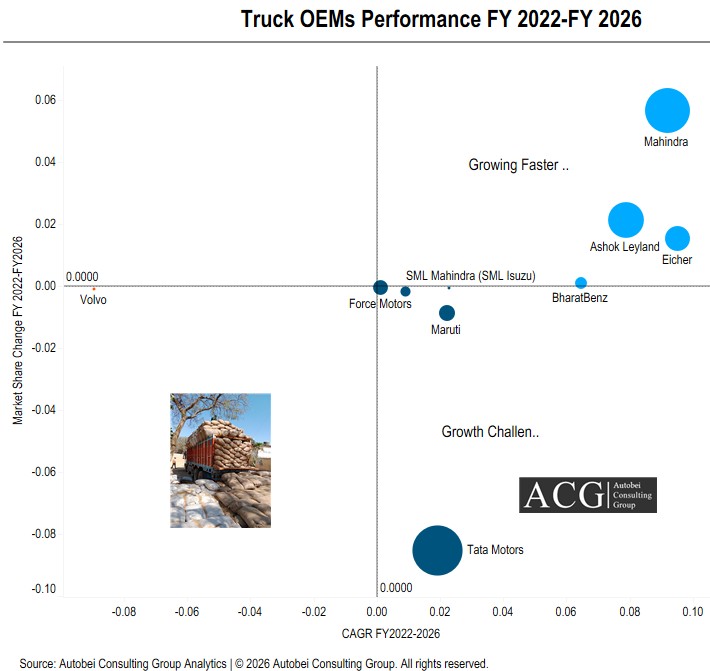
Market Share and Growth Analytics:

Tata Motors is a market leader in most of the truck segments in India. However, it is losing market share, or competitors are gaining market share due to changes in Product and market dynamics.Trucks Brand market share in India FY 2026
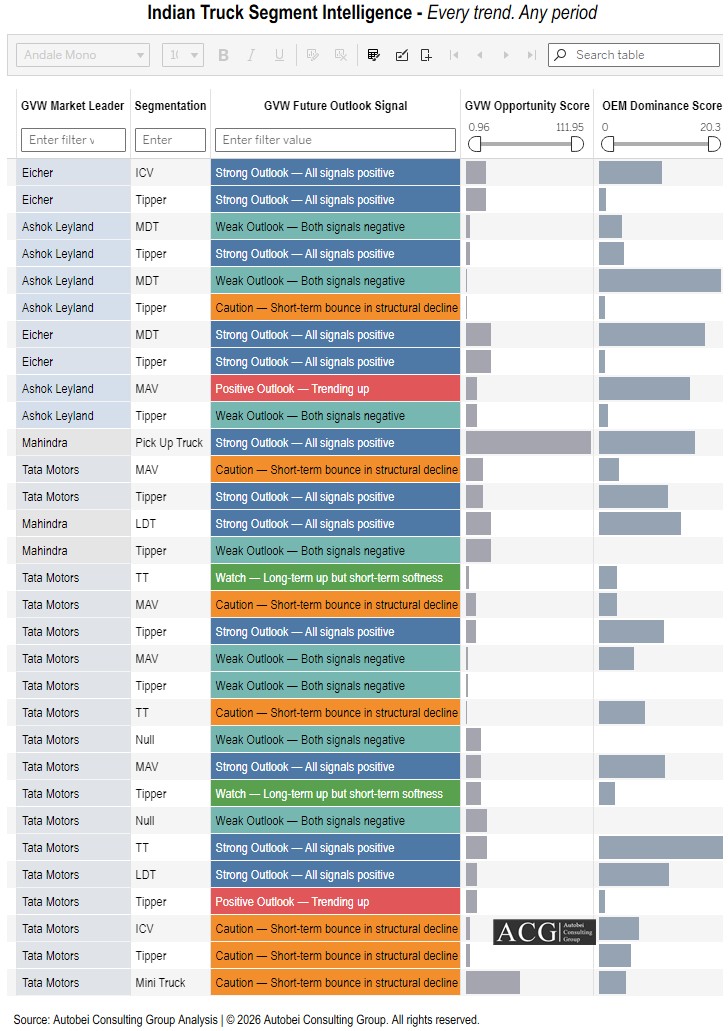
Indian Truck Market Segment-wise Forecast:

When OEMs want to launch a new product or model, the table below provides key insights for gaining market share in a specific segment. This partial part of the full analytics table. Tata Motors lost market share across 10 categories of the LDT, MDT, and HDT segments.
Indian Truck Market segment wise forecast

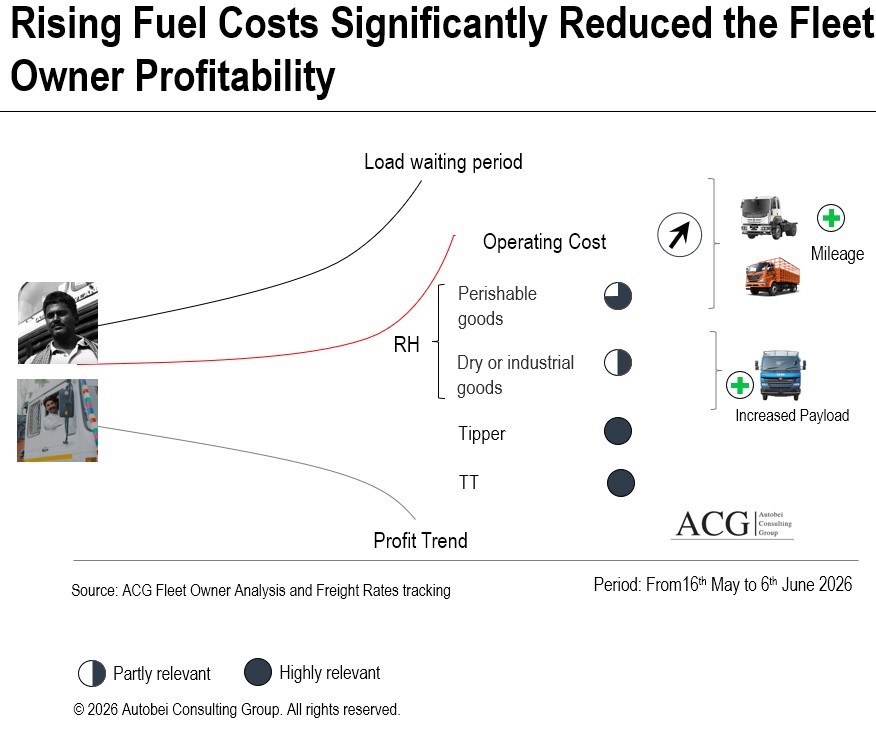
Impact of Fuel Price Increases on Fleet Owner Profitability:

The Truck Fleet owners have been facing a decline in profits over the last 1 year. After the fuel price increase in May 2026, there is a significant impact on operating costs and load demand.

The main segments that have been badly impacted are Tipper, Tractor Trailer, and Rigid Haulage, especially in Perishable goods transportation, where mileage plays a crucial role in profit.
Truck Fleet owner profit

Due to the high operating costs of Diesel Trucks, alternative fuel types like CNG and Electric Trucks will see strong growth in the coming months.

Contact us at Info@autobei.com to  get the Full report
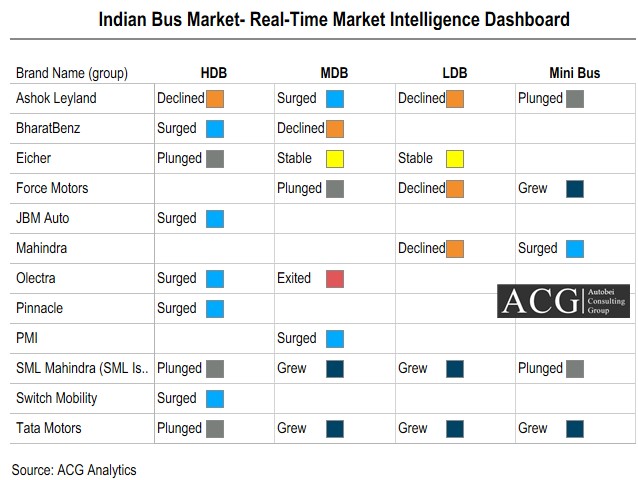
Indian Bus Market and Product Analytics is a unique analytics that covers various aspects of buses and Bus models. The Bus Industry registered 5.5% growth in FY 2026, the slowest since the COVID-19 pandemic. One of the key drivers of Bus growth is that bus passengers prefer to take new Buses. There is pressure on the Bus fleet owner to buy the new buses to attract the passengers and Bus drivers.


The Bus application is the backbone of the Indian Bus Industry, and mapping it to models provides a complete picture. The Bus fleet operators and passengers are also key stakeholders of the Indian Bus Industry.

SnapShot: Indian Bus Market & Product Analytics

Indian Bus Market Tracker:

Monthly, Quarterly, and Annual Tracker:

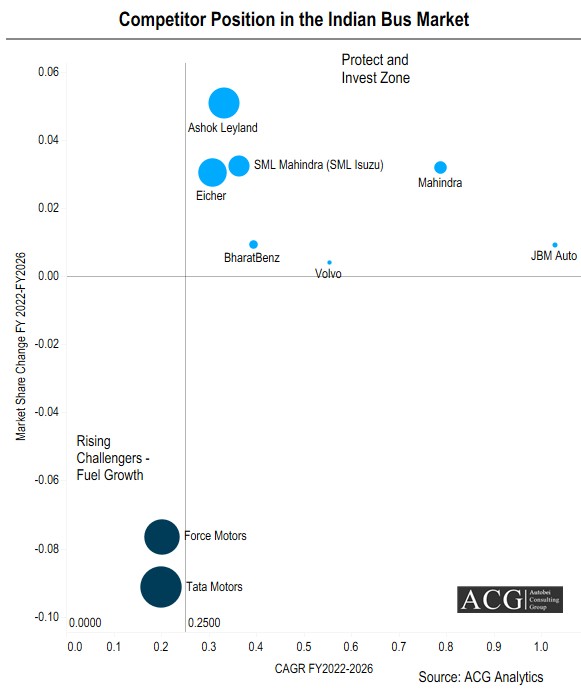
Electric bus manufacturers such as JBM, Olectra, PMI, and Switch Mobility recorded strong growth in FY 2026 compared with the previous financial year. In ICE Buses, Force Motors registered the highest growth of 16% in the current financial year. Currently, tender business is the main driver of Electric Buses, but private passengers could become the key buyers in the next decade.

Indian Bus Market and Product Analytics

Tata Motors, SML Mahindra, and Mahindra also saw 1%, 12%, and 8% growth in FY 2026.

Ashok Leyland is losing its position in the heavy-duty segment due to minor product issues related to BS VI norms. Since FY 2021, it has lost 3% market share.

Buyers of Mini Buses are shifting towards Force Motors because Demand for the Urbania model is high. However, in some bus pockets, there is an oversupply of buses, such as in the Pune region.  This could affect the future demand for buses.

Bus Application-wise Analysis

Mapping with Key Models:

Urbania’s price is an average of 32 lakhs, compared to the Force Traveller’s 22 lakhs. The charges are around 35-40 INR per km for Urbania. But the name Urbania successfully won the trust of passengers, especially in the Tourist segment. The passengers are ready to pay a premium for Urbania because the Bus interior is excellent for Urbania.

Force launched a new bus called the Force Traveller Monobus with a Monocoque Structure. This bus is highly suitable for Staff application. The price of the bus is around 30 lakhs with excellent mileage of around 7 to 8km/l.

Indian Bus Competitor Analysis

In segments of 12m or more, the washroom became compulsory for the Intercity Bus segment due to passenger demand. The trend is moving towards 13.5m buses because Bus operators have an extra 6 sleeper seats, which generates extra revenue. Volvo 9600 is the only Bus in the 15m length category.

Tata 1822 and Ashok Leyland 2513 are popular models in the 13.5m segment, delivering 15-20% higher revenue.

BharatBenz buses, models 1824 and 1017, offer superior comfort to passengers but come at a 10-12% higher price. The Eicher 6000 series offers high mileage at low prices (6-9%). Tata Motors is known for its performance, and Ashok Leyland for Durability.

Like Trucks, Eicher offers better fuel efficiency, but it comes with a 4-cylinder engine, which can be noisy. The Eicher Body is built at the Volvo Plant, resulting in a much better quality of the Bus Body.

Due to the Bus body code AIS 153, the market share of the Fully Built Bus body increased to 78%, while only 22% of Buses Were sold as chassis. The AIS 153 is applicable to around 80% of the Bus Market in India because it offers advantages for passengers (FDAS, FDSS, CCTV, etc.), such as safety, for bus fleet operators, such as lower risk and higher asset safety, and for drivers. All buses are included under AIS 153, regardless of GVW and Bus length, because student safety is the first priority.

Contact us to get the full report at Info@autobei.com

The Indian Electric Bus Market Forecast Report provides detailed strategic insights into the Indian Bus Industry. Indian Electric Buses are set to undergo a major shift from niche to mass market over the next 10 years. Currently, the STU is the major electric bus user, but private Bus operators are now ready to take the steering of electric buses into their own hands under certain conditions.

It is expected that 50% of buses in the 7m-and-above segment will be electric by 2040 in the Indian Electric Bus Market.  The current fleet of Electric Buses in STUs is in 9 and 12m. The 12m standard floor/Low floor buses for Intercity and city applications. 9m standard floor Electric buses for medium-density urban routes and 7m standard floor for narrow streets or low-density. There are 2 major buyer groups for Electric Buses: Private operators and STUs. Private operators are the backbone of the Indian mobility sector.

A new tender was opened in April 2026 for 3,604 electric buses across 17 states and union territories. The Government of India is also taking steps to introduce the Intelligent Transit Management System (ITMS), as it makes the process more transparent and brings several key benefits for Passengers, Authorities, and operators.

However, there is a significant gap between the open tender and the operation of buses due to various reasons.

Snapshot of the Full Report: Indian Electric Bus Market Forecast

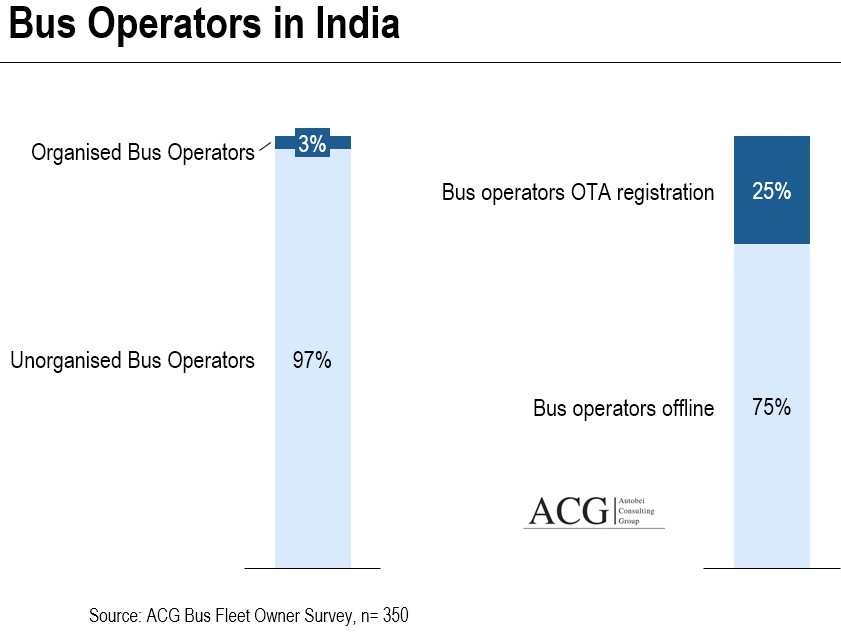
A large share of bus operators in India still belong to unorganized groups, and most of them work in a traditional style.

Bus Operators in India

We study various aspects of why India’s Bus Operators are Finally Switching to Electric buses. According to our ACG survey, OEMs need to communicate with the market more effectively. It is not just about the Pricing of the Bus and ROI, but also about connecting the entire ecosystem, like Electric Bus, energy, infrastructure, and commercial benefits.  We have conducted an in-depth study of several bus fleet owners, Policymakers, Policies, OTA platforms, Passengers, and others.

Electric Bus Business Case:

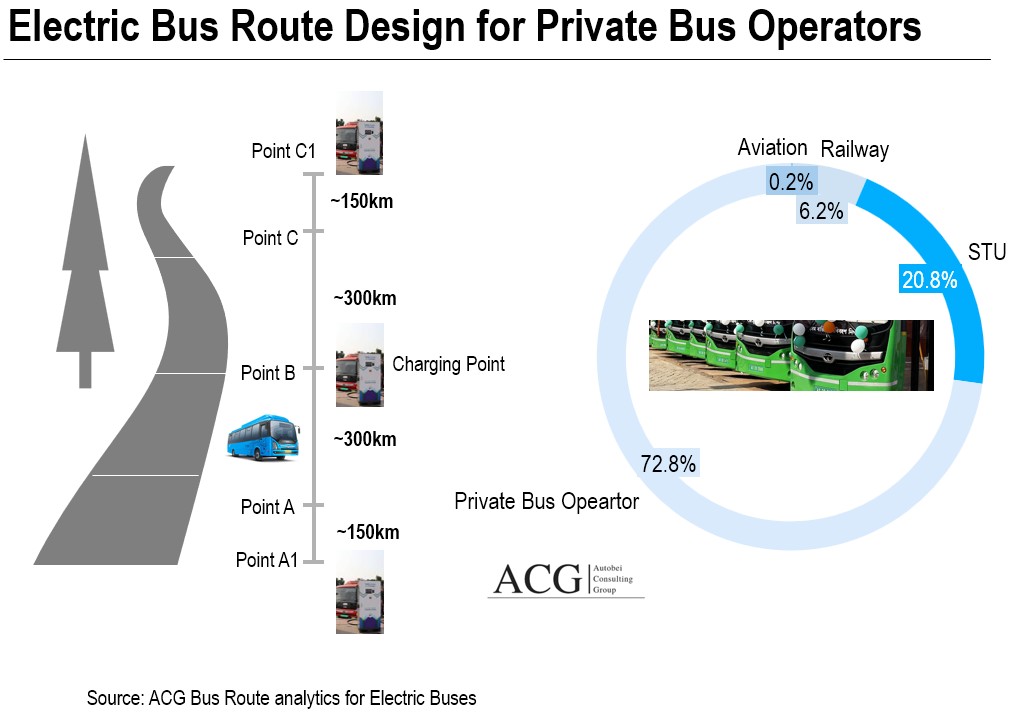
Private Bus operators are expected to carry around 35 crore per day by 2030, including STU. This is the big market potential and opportunity. At least 50% of passengers expect a comfortable journey, and they are ready to pay for value and comfort.

Electric Bus route design in India

The first basic condition is that it provides confidence that the bus will reach the destination either with a 50-60 min charging time or without intermediate charging. If the one-way distance is around 300km, then the electric bus fulfills the basic requirement. The second challenge is the Bus’s purchase price.  The Electric Bus Business case looks favorable, even with double the price of the ICE buses. Diesel costs are a major component of ICE bus operating expenses. Passengers enjoy traveling in electric buses because they are low-NVH, Silent, and feature-rich.

Electric Bus Price position and Paypack period:

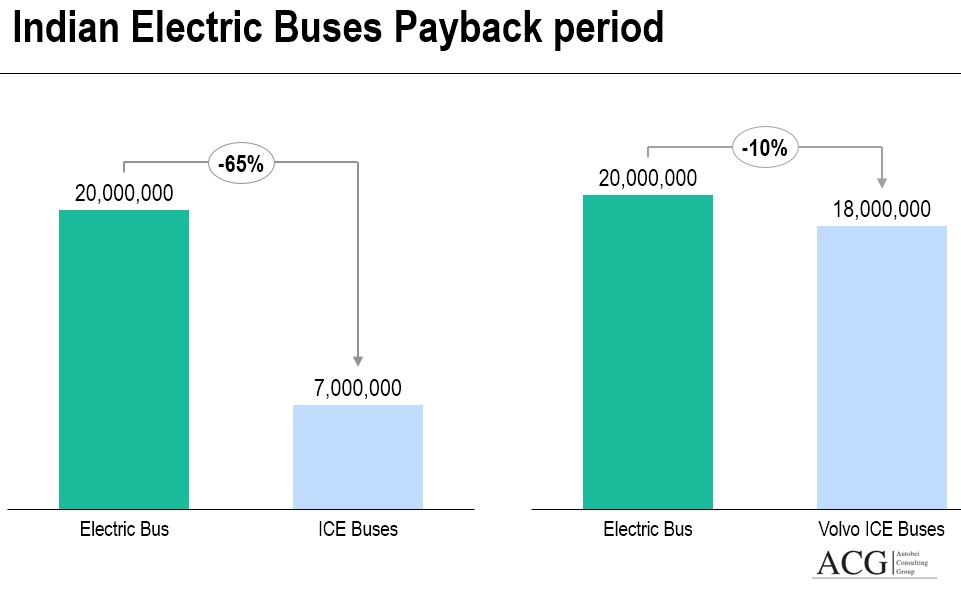
One of the main hurdles to perception is the high price of the Electric Bus. The average price of the Intercity bus is around 2 crore. Compared with the ICE bus in the same segment, the Electric Bus is around 65% more expensive.

The Volvo 9600’s price is almost the same as its position. According to the ACG Business case, the payback analysis is favorable if the bus runs 700-800km per day.

Indian Electric Buses Payback Period and price position

Some prime routes where electric buses will be deployed in the next 2 to 3 years include Bangalore-Hyderabad, Bangalore-Chennai, Gandhinagar-Vadodara-Surat, Bhopal- Indore, and Bangalore-Coimbatore. Once the charging infrastructure is available, there will be a jump in the share of electric buses. Some routes, like Delhi to Manali, work by installing a charging station at an intermediate restaurant. While the Bus was being charged, the passengers could have tea and snacks. The charging must be fast, with more than 350 kW.

Electric Bus Market Forecast:

Electric Bus Demand Analytics

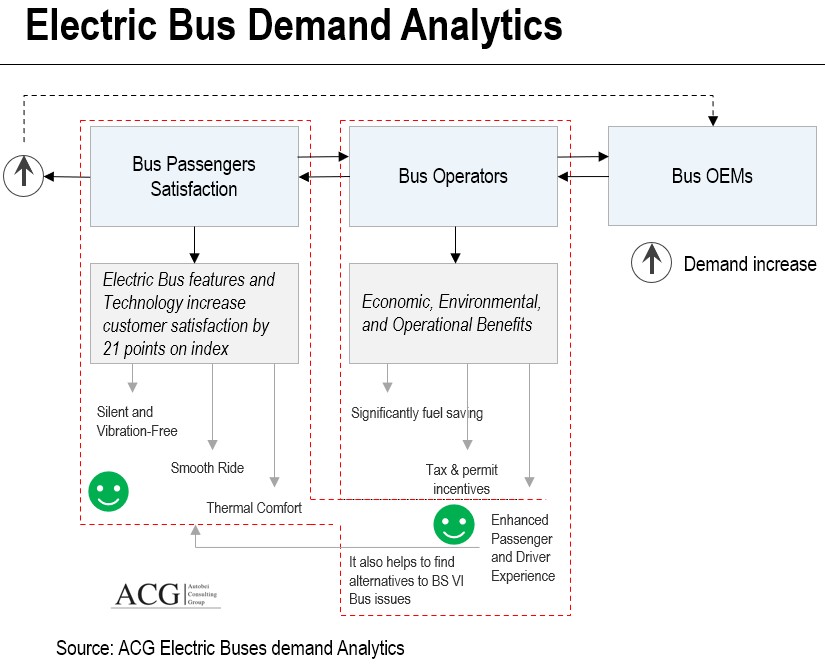
The demand for electric buses will increase when all stakeholders are satisfied or delighted. It has been observed that when passengers are happy, there is a significant increase in electric bus registrations. If Bus passengers are happy, they become more loyal customers of the Bus fleet, which results in them becoming frequent travelers. The consolidated impact will be positive for Electric Bus demand.

Currently, Neugo operates electric buses on some popular routes, such as Bangalore-Chennai, with one intermediate fast-charging stop in 40 min to reach 87% battery charge. Leafy Bus is another Private Bus Fleet operator who is running Electric Buses between Dehradun and Delhi. With 85 to 90% occupancy, the buses’ duty cycle is around 800 to 900km in 24 hours. The Bus fleet has 12.4m JBM buses with 49 passengers.  Since the operations are successful, the company plans to increase its Electric Bus fleet to 6 times its current size.

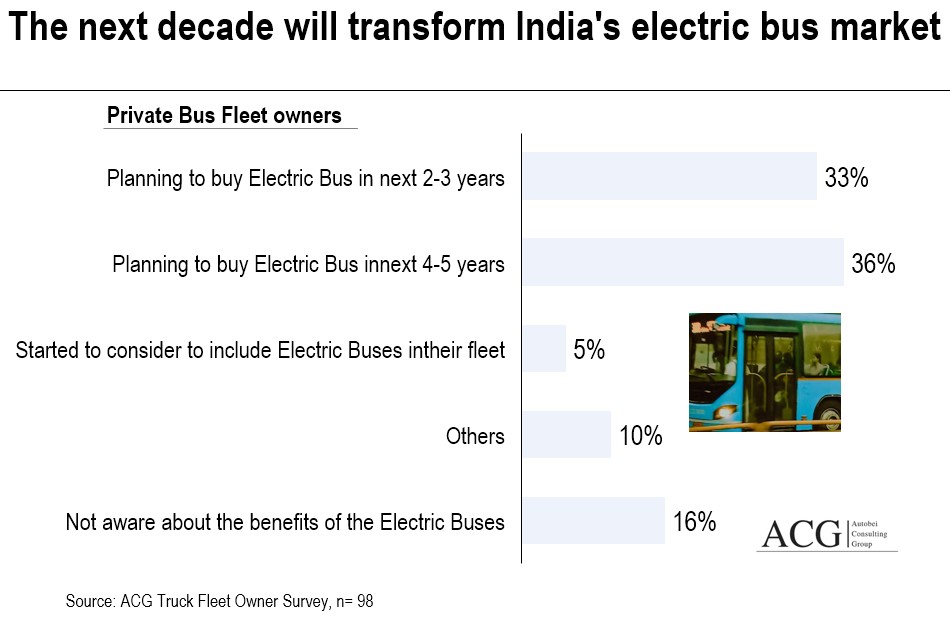
The next decade will transform India's electric bus market

The Bus Fleet owners have started considering electric buses for their fleets. ACG helps them transition from ICE to Electric Bus fleet ownership. More than 69% percent medium and large fleet owners who operate on the main route are interested in adding electric buses to their fleet.

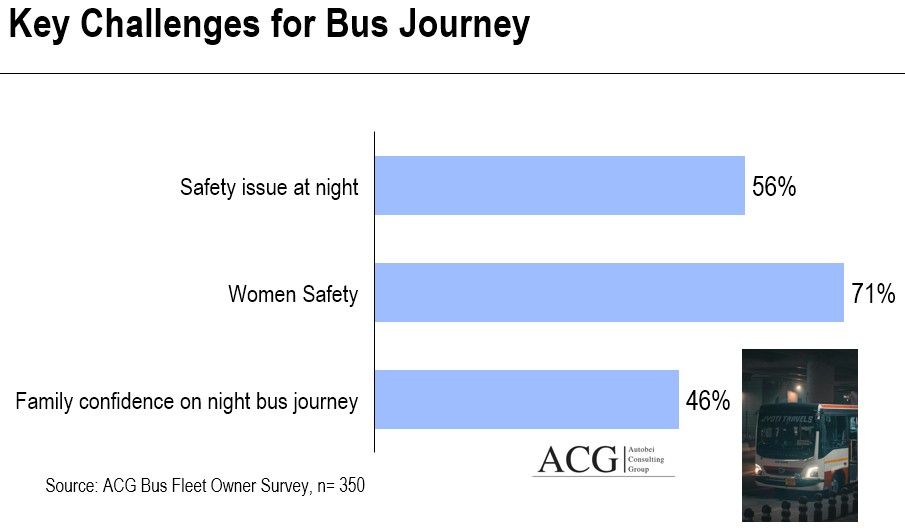
There are also some challenges in the overall Bus journey, as passengers willing to travel by bus are facing issues. This is a barrier to using buses or replace from Train to Buses:

key challenges for Indian bus passengers

Contact us at Info@autobei.com to get the full report

ACG released Application-wise Bus Market Forecast Data. The Indian Bus sales Industry registered 5% growth in FY 2026 compared to FY 2025. The 10-meter-long Bus is the largest segment. The Bus segment of the smaller length segment stagnated due to limited demand for small buses after the COVID-19 pandemic.

Application wise Indian Bus Forecast

The data has been mapped with the length of the bus. Various bus lengths from 4 to 12 meters plus. The data provides key insights into which Application sold the most by Bus length, as well as the forecast for 2035. The market is moving towards longer bus lengths.

The Data is highly useful for the electric bus business strategy also.

Private bus operators are the largest segment in India. Passengers’ willingness to pay a premium and better road conditions influence bus-buying decisions. The data also included the duty cycle in each segment:

  • Price (INR)
  • Duty Cycle
  • Fuel Type
  • AC or non-AC
  • Bus Length
  • Floor height
  • Actual Sales till FY 2026 and Forecast 2035

Indian Truck Fleet Owner Report is a detailed report based on the Truck fleet owner survey, Drivers, Transporters, and other stakeholders. More than 3000 Fleet owners have been covered in this study. The various aspects and market dynamics have been included because every parameters impact on Indian Truck and Transport Industry.

The application of the truck is key for OEMs, Fleet Owners, Logistics companies, and other stakeholders in the Truck Industry. This has once again been reflected in our survey.

The Indian Truck Industry is not just about market size and technology; behind the wheel, there are many challenges, dreams, risks, hard work, a passion for driving, and daily struggles. We have discussed every aspect of the Trucks’ supply chain.

Trucks are the lifeline of the Indian economy, and transporters and drivers are the backbone of the Indian Truck Industry.

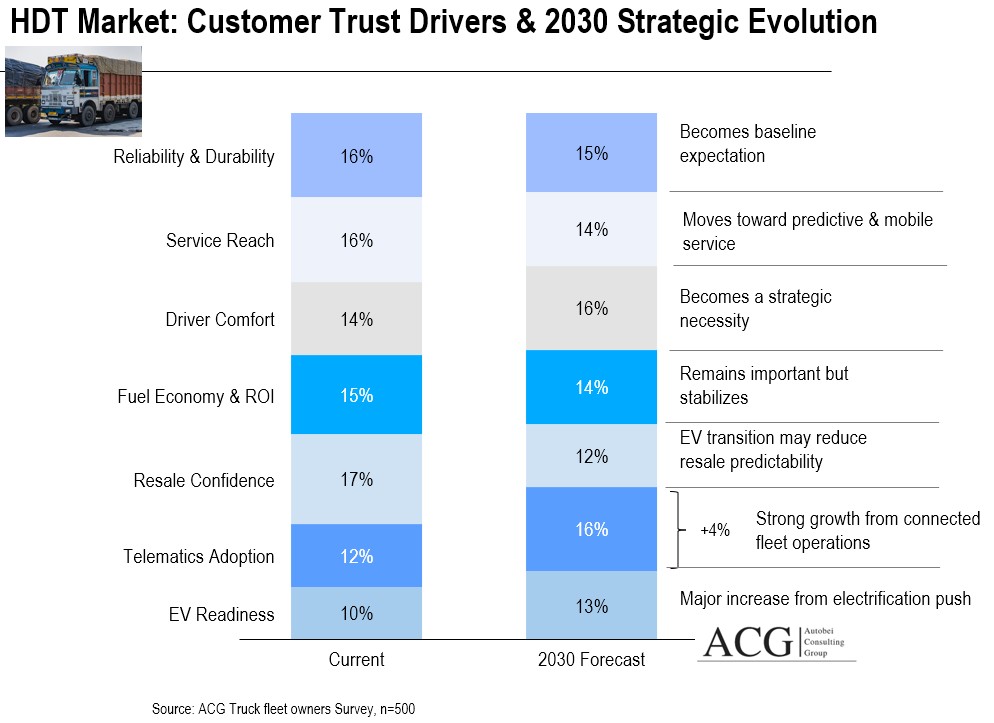
The Indian Truck Industry is characterized by multiple market dynamics. The Indian Truck Industry Ecosystem is complex and interconnected, with each component’s performance affecting the others.  We conducted a primary survey of Indian truck owners, providing insights into opportunities and challenges for DieselCNGLNG, and Electric Trucks, as well as ways to improve overall product performance.

Short version of the Full Report:

Why and how Truck fleet owner change their Truck brand:

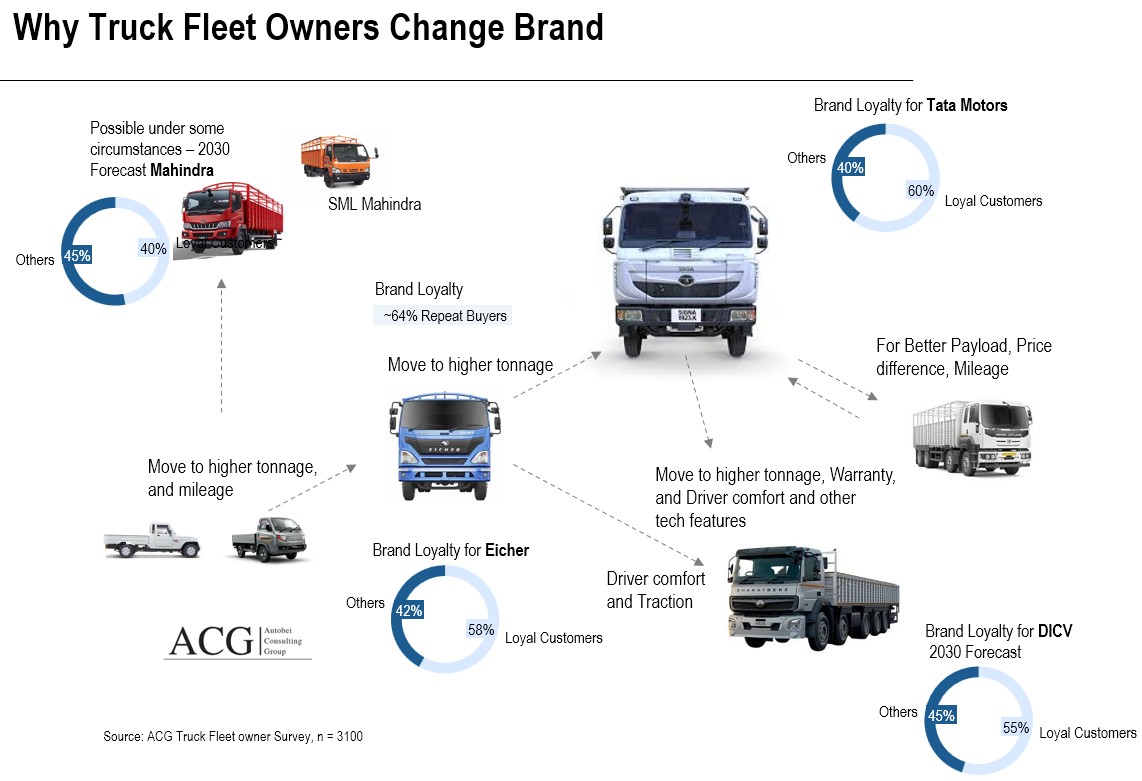
Customers consider the Eicher Brand when transitioning to the LTD or MDT business from the Small Truck, due to high mileage and low toll charges. When truck owners move from LDT/MDT to the HDT segment, they prefer Tata Motors trucks for their high reliability and traction.

Many times, customers switch from one brand to another in the HDT segment because of testing other brands’ performance, price differences, and higher payload.

Customer loyalty is one of the key factors shaping the overall brand experience when customers are not upgrading models. Eicher and Tata Motors have the highest loyal customers in the MDT and HDT segments.

Why and how Indian Truck fleet owners change Truck brands

BharatBenz fits perfectly within the Indian Truck Industry’s dimensions. But customers are either loyal to other brands or have had an experience with BharatBnez. Mahindra has the potential to become a leading player in HDT. The Furio has excellent market feedback. Mahindra needs to change its truck brand perception to succeed in the market, just as it has changed the game in the SUV segment.

This survey fulfills the purpose for the Electric and ICE truck segment.

We have interacted with 5000 Truck owners covering every corner of India to understand the geography’s impact on truck type suitability, including

  • Single Driver owners
  • Small Truck Owner
  • Medium Truck owners, and
  • large truck owners

Purchase behavior, income, expenses, Duty cycle, EMI, Revenue, profit, and other factors depend on the type of Truck and its applications.

Indian Heavy Duty Truck Survey

Truck Brand Value proposition:

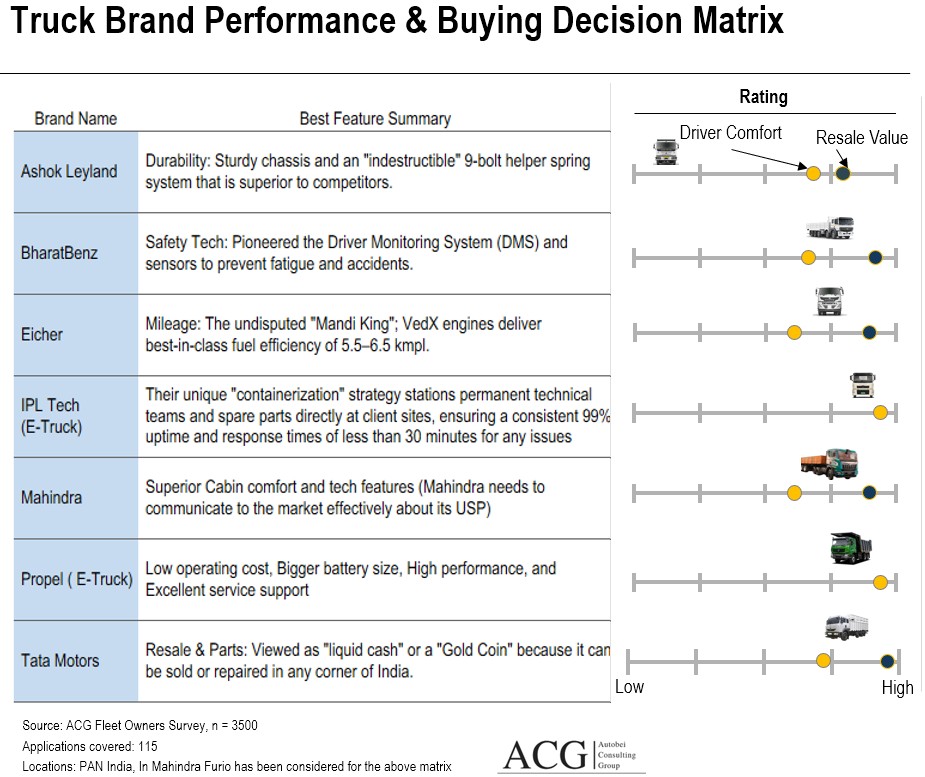
Every Truck brand has some uniqueness. We have mapped every model and its variants to their respective application types. Some models are more suitable than others because truck specs, price, service, and customer preferences vary by application.

Indian Truck Brand performance and buying decision

BharatBenz and Mahindra have the best cabin space and driver comfort. Tata is known for its performance on tough terrain, service network, and resale value. Eicher is known for its high mileage and low fatigue during long drives.

Propel has set a benchmark in the Electric Tipper industry for battery, performance, and After-sales support.

Truck Payload Utilization Pattern Analysis:

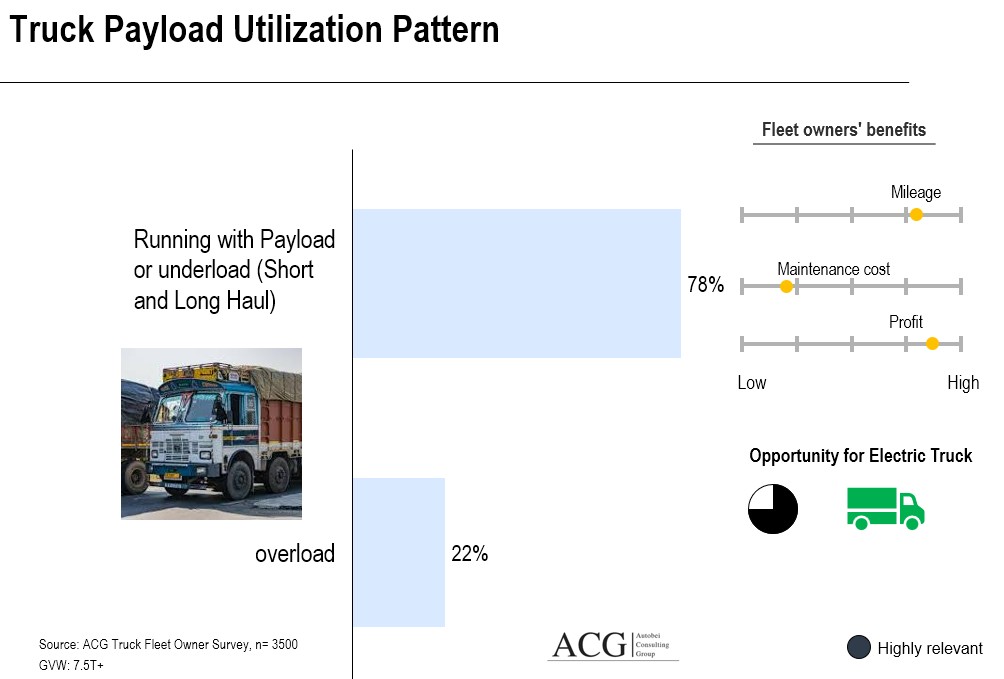
Over time, truck fleet owners have changed their mindset from profit-only overload to profit+ Truck life with rated or under-load in the Rigid Haulage and Tractor Trailer segments. The Tipper practice differs with application and locations.

The Electric Truck application suits this scenario, but it applies only to a specific payload category.

Indian Truck load pattern analysis

Fleet owners have started to prefer running trucks at rated payload or slightly underloaded because there are measurable benefits, such as higher mileage, no RTO penalty, and tire life.

Indian Truck Replacement Cycle:

There are many factors that impact the Truck demand analytics. If the truck utilization is low and demand is high, there are fewer chances to increase truck sales.

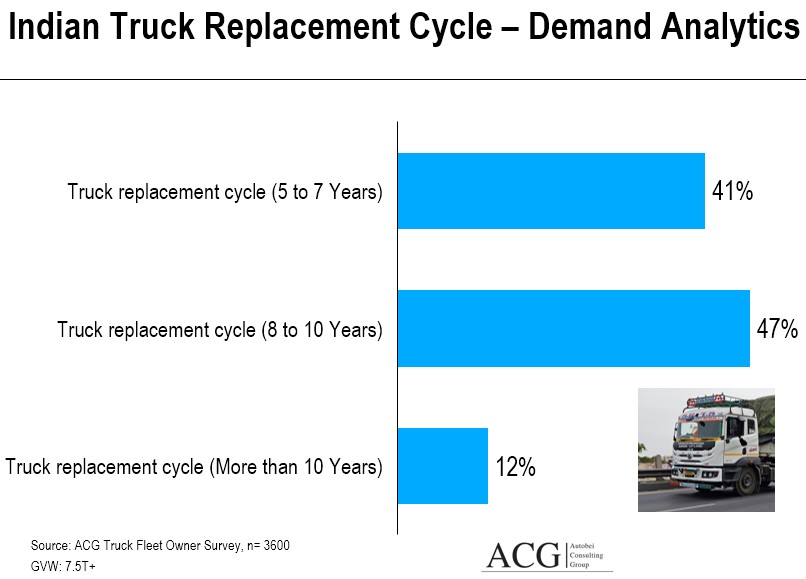
Many Truck Owners decided to sell their trucks after 5 years of repaying the truck loan to avoid the high maintenance cost and buy a new truck at a good price.

Indian Truck Replacement Cycle

Primary source of Freight load:

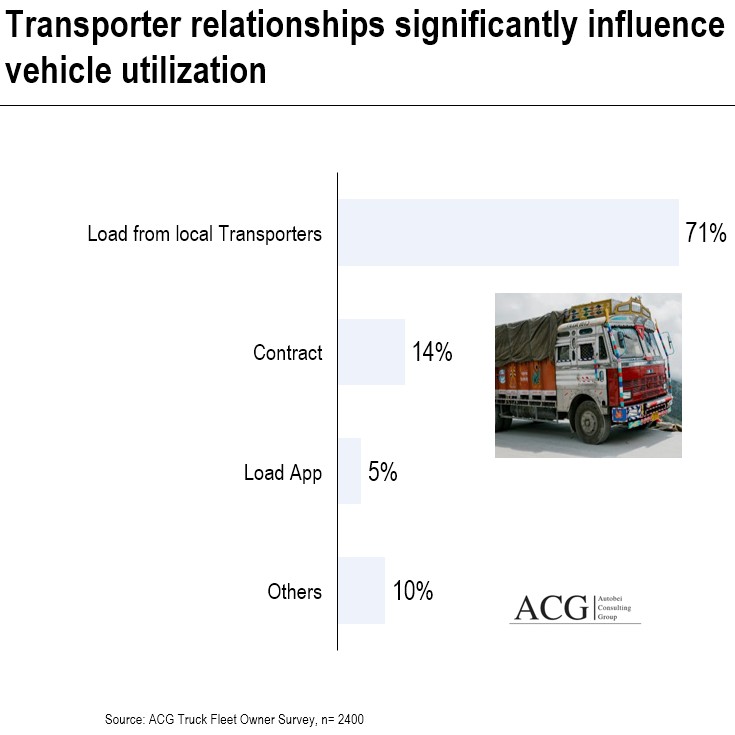
The Trucking and logistics industry needs digitization to better utilize trucks. The majority of truck owners depend on Transporters to get loads. Transporters or agents take between 5% to 7% commision on each load.

Truck gets load mainly from transportersIf the Digital platform works successfully, the Fleet owners’ revenue is expected to increase by 30 to 40% because truck utilization, reduced waiting period,  and freight rates could also increase.
Sales Enquiry Response:

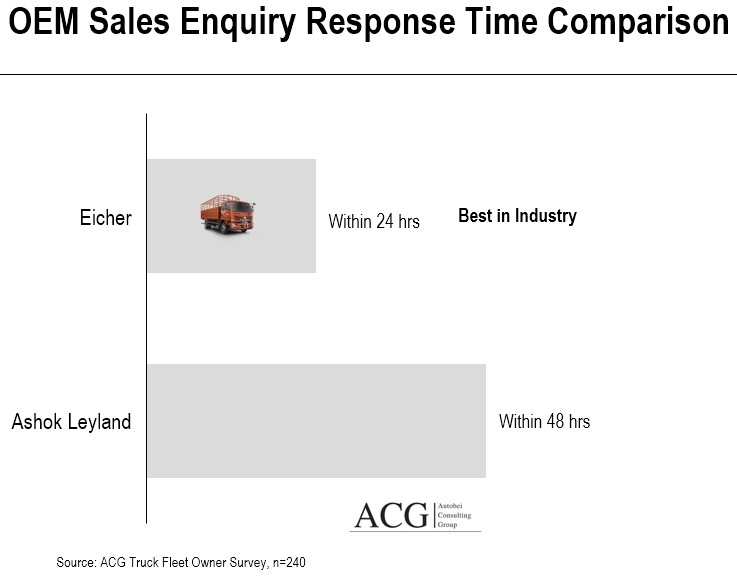
Faster response from the Eicher Team significantly influences the lead conversation rate. It also indicates how important customers are to the company.

Truck Brand Sales Enquiry response

MRF, Apollo, and JK Tyre are the preferred tyre brands among fleet owners due to their value propositions across various applications. However, Truck owners are open to considering other tire brands also under specific circumstances.

Contact us to get the full report.

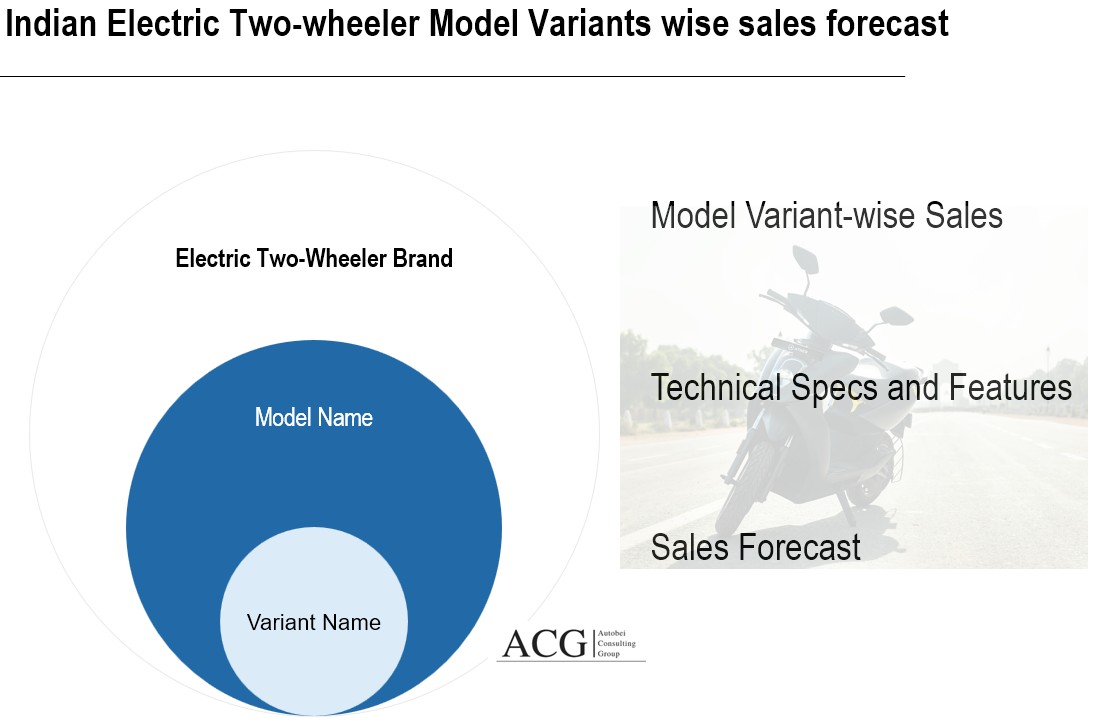
Indian Electric Two-wheeler Model Variants-wise sales forecast is macro-level data with a forecast for 2040. There is a wide difference in sales among variants of the same model.

The model-wise sales data is not particularly useful because there is a 180-degree difference across all variants. For example, Ather has 25 variants: one variant of the Rizta at the top with a 22% share, and the other variants in 17th place.

Indian Electric Two wheeler Model Variants wise sales forecast

Ola has 36 Variants in 2025. Ola OLA S1X has one variant as the top seller, and another one has the bottom 5 variants.

Along with sales, we also provide monthly market insights on battery size, product updates, Price, Charging time, software updates, and other features.

The TVS iQube has 10 variants, 2 of which are top sellers, and 1 ranks in the bottom 5 among all TVS Two Wheelers.

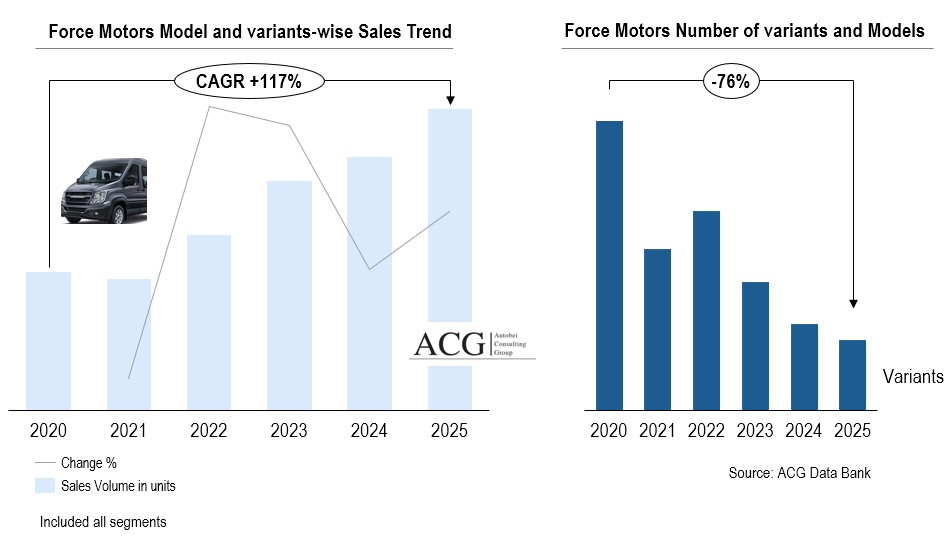
The Force Motors Model Variants-wise Sales Forecast has segments such as Bus, Agricultural Tractor, and SUV. Force Motors had 277 Model variants in 2020, which had been optimized and had only 67 Model variants in 2025. There are still opportunities to phase in additional varieties and launch new models.

The company registered 17% growth in 2025 compared to 2024, and its sales doubled compared to 2020.

Force Motors Model Variants wise Sales Forecast

The Traveler is the leading force motor for school, staff, and Ambulance applications, in high demand among passengers and travel agencies. The Urbanis became the first choice for the luxury travel segment.  Customer demand for the Urbania bus is high.

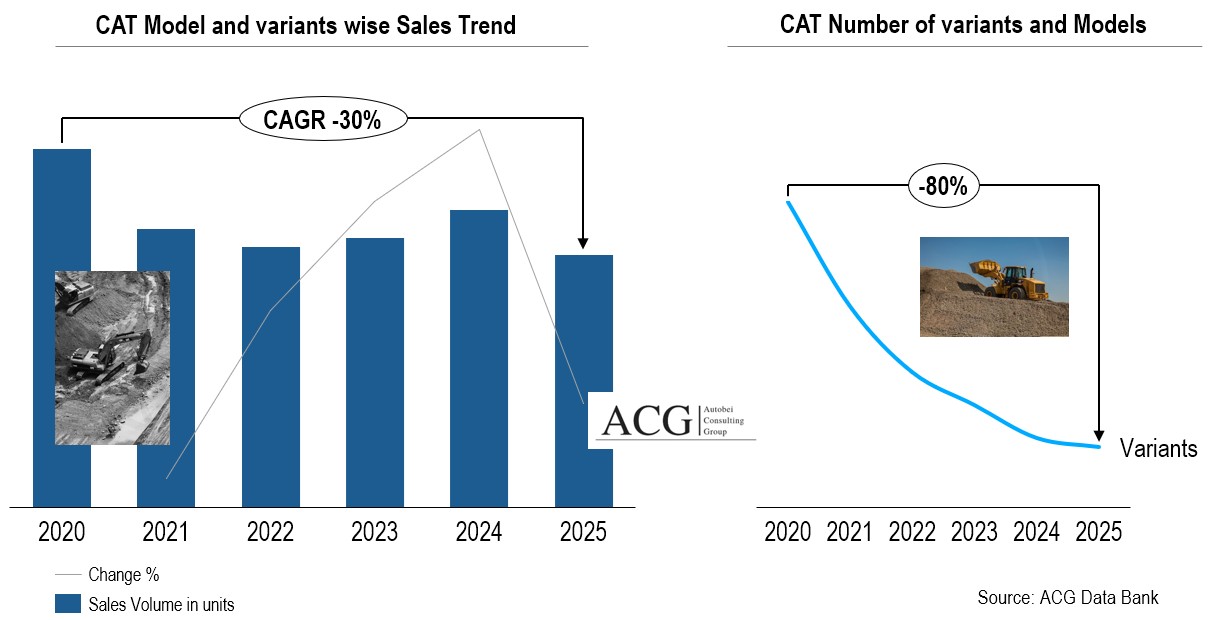
ACG released the Caterpillar India Model-wise Sales Forecast 2035. In CY 2025, the company recorded 15% degrowth from CY 2024, driven by weak demand and market conditions. 424 BACKHOE LOADER – 2WD, HINDUSTAN 2021E WHEEL LOADER are the leading models of the CAT in India. Caterpillar India registered 20 Models in the last calendar year, with the top 2 models contributing 67% of sales. In CY 2012, the company had 338 Models and variants in the Indian market, which came down significantly to 20 in 2025. In 2020, the company had 102 models and sold 2516 units.

Caterpillar India Model wise Sales Forecast

The company holds a prominent position in construction and mining. Specifically, the USP of the CAT products is their performance in difficult terrain and the life cycle of their equipment.  Our Model-wise sales data for CAT machines is exclusive and shows model-wise sales by units and by value.

Another brand, JCB, also showed the degrowth in CY 2025.

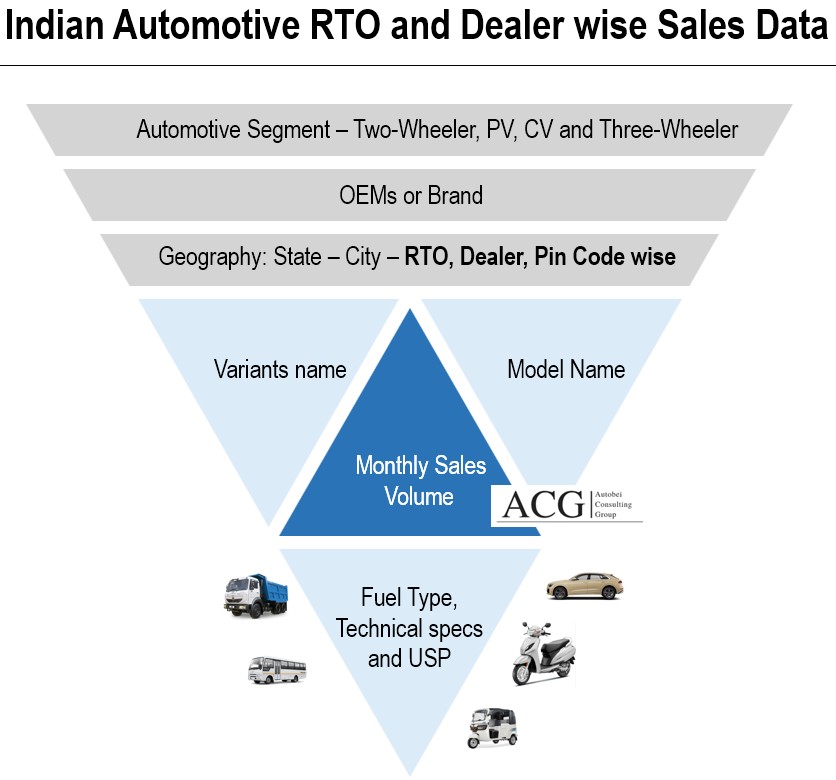
Indian Automotive Model RTO and Dealer-wise Sales Data introduced the exclusive Indian Automotive Sales data. For a winning market, the segment-wise and model-wise data are not sufficient. Even within a single model, prices, features, and specs can vary widely.

Indian Automotive RTO and Dealer wise Sales Data

The data included the following Vehicle types:

  • Two Wheeler:
    • Motorcycle, and
    • Scooter
  • Passenger Vehicle:
    • Cars,
    • SUVs,
    • MUVs, and
    • VANs
  • Commercial Vehicle:
    • Truck, and
    • Bus
  • Three Wheeler:
    • Goods Vehicle, and
    • Passenger Vehicle
  • Fuel Type:
    • ICE
    • EV
    • CNG
    • LNG
    • Hybrid and other

This data helps to map the demand for specific models and variants in India.

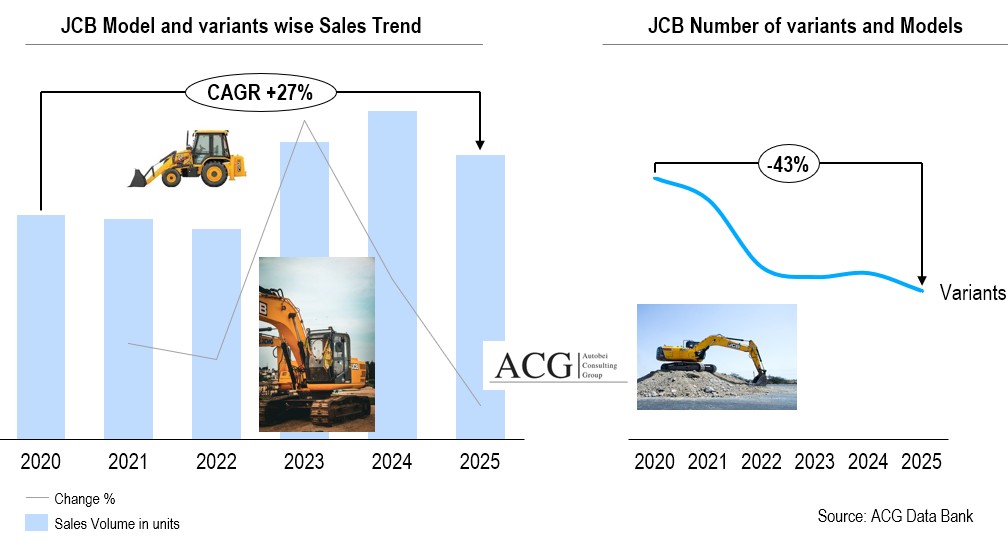
JCB Model and Variants-wise Sales Trend and Forecast is our exclusive service. JCB is one of the prominent players in many off-road vehicle and Construction segments in India. The company registered 132 variants in several categories.

JCB registered 13% degrowth in 2025 compared to 2024. The new JCB models and variants have been added to the top 10 in 2025 sales. The number of variants has been optimized from 132 to 75 over the last 5 years. The top 10 variants account for more than 95% of sales in 2020. JCBL has a strong hold in the backhoe loader segment.

JCB Model wise Sales Trend and Forecast

Backhoe loaders are suitable for a variety of field operations, such as digging, loading, and utility work. The value proposition is its robust performance and 2 types of operations in a single machine.

Hero MotoCorp Variant-wise Sales Trend and Forecast is our exclusive data. This data includes both drivetrain types: ICE and EV. The Indian two-wheeler market is highly competitive and dynamic.

Hero MotoCorp Model and Variants-wise Sales – 2010 to 2025

In 2010, Hero Honda, the last year of its highly successful run, had 2000+ variants. After separation, both companies optimize their product portfolios to align with their brand images, target customers, strengths, and weaknesses. In 2011, the Hero Passion Pro was the leading model, and the Splendor PRO was the second-largest-selling model. The other key models were Splendor Plus, Hero Honda Pleasure, Glamour, and Hero Honda CD Deluxe, all of which were in the top 10. There was a good mix of the product portfolio.

In 2025, HF Deluxe DRS and Splendor are the only two model variants in the top 10 selling models.

Hero MotoCorp registered 274 Variants in 2025, which is 200% fewer than in 2020. The combined sales of 274 model variants were 5.8 million units, up from 5.4 million in 2020. The company’s sales are mainly dominated by the Executive segment of motorcycles. One model is the backbone of the company. This is a highly risky business model for long-term growth.

Hero Splendor Plus key buyers are rural and semi-urban mass commuters who use bikes for daily office or work commutes. FH Deluxe is mainly a price-sensitive customer group. Splendor XTEC Young urban commuters or tech-focused. The key criteria of Hero MotoCorp are the customer group who have the following matrix in their mind:

  • High Fuel efficiency
  • Low Maintenance cost
  • Reliabiloity
  • High resale value
  • Large service network

Hero MotoCorp Electric Scooter sales:

The company has 14 variants of electric scooters. Only 2 variants are at the top, with 90% of sales volume in 2025. These 2 variants are in demand because VIDA’s customer base is looking for value, not price. There is an opportunity for VIDA to position this brand in the premium segment.

The Key Challenge:

How to change the image of “Functional commuter” to ” Premium commuter”. The Indian two-wheeler market is dominated by Bajaj, TVS, and Honda. The premium segment remains untouchable for Hero MotoCorp because of its brand legacy in the economy segment. Launching a new brand could help the company to have a strong presence in the Premium segment.

ACG provides RTO- and variant-level Indian two-wheeler sales data, which helps OEMs map their product, sales, and marketing strategies to their sales or market share goals.

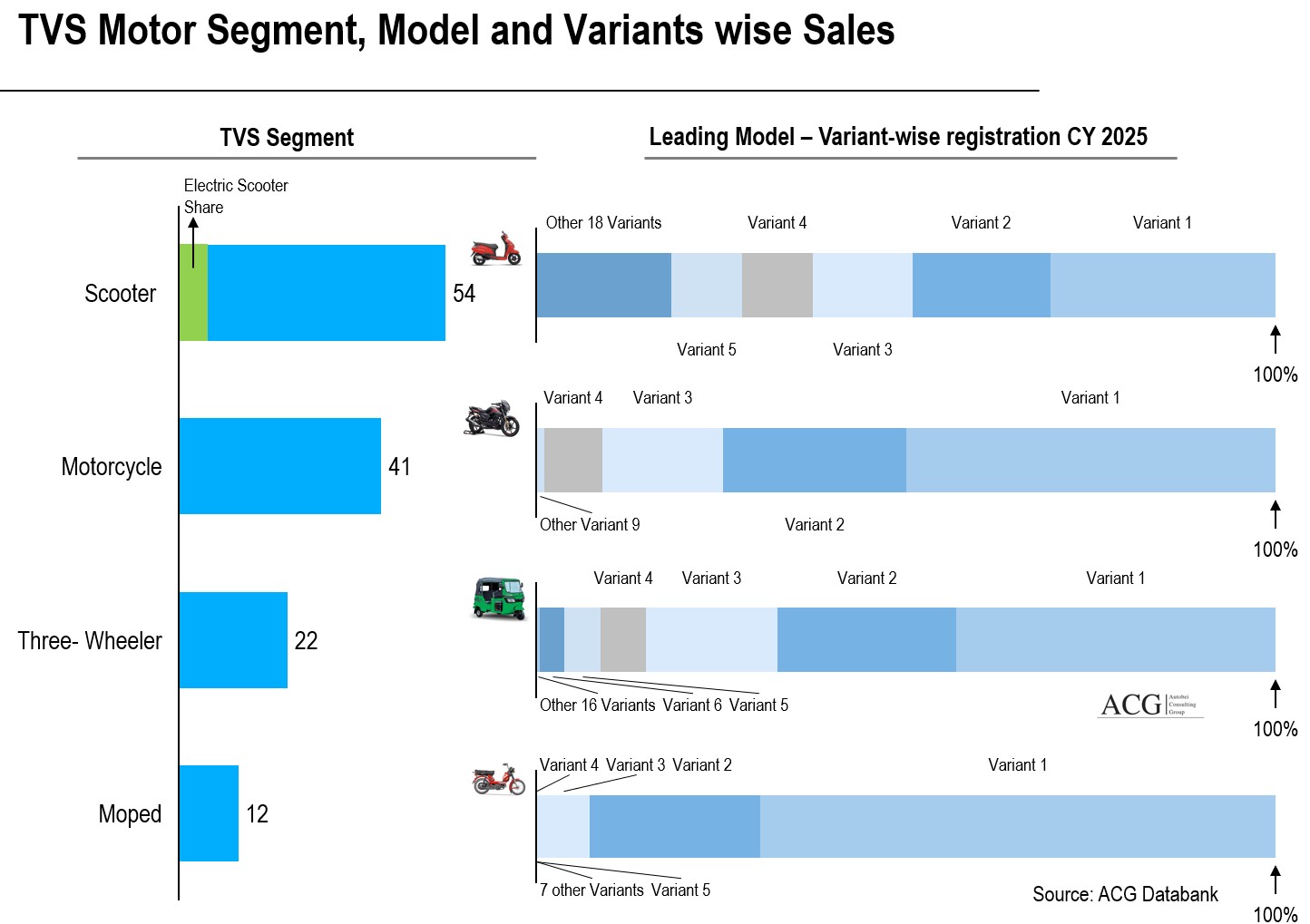
TVS Motor Variant-wise Sales Forecast 2030 is available with deep market, customer, and product dynamics. TVS Motor is the leading OEM in India’s Two- and Three-Wheeler Industry, with 129 variants registered in CY 2025 and 3.8 million sales.

TVS Motors Variant wise Sales Forecast

TVS Motor Two-Wheeler:

Just 6 Motorcycle, Scooter, and Scooty variants from TVS accounted for 71% of sales in CY 2025. Two variants of the TVS Three Wheeler accounted for the highest sales in the last calendar year. The popular price band is 85,000 to 150,000 INR because Indian customers are moving towards the value-plus and premium segments. The key to TVS Motor’s success is the premium segment.

TVS Scooty was among the Top 10 best-selling models in CY 2019. Now, one of the iQube variants comes under the Top 10 selling variants. Young Female buyers moved from the Scooty to the NTorq, and urban female buyers prefer the iQube electric scooter.

In CY 2025, TVS has a 20 EV variant. TVS has an EV product range spanning the entry-level to premium segments across scooters and three-wheelers.

In CY 2019, TVS Motor registered 2.7 million two-wheelers, including 1,778 Motorcycles, Scooters, mopeds, and Scooty variants. The number of variants has not only been reduced, but the company has also improved variant naming and optimized product portfolio through better CRM.

The company is the market leader in electric scooters due to its driving comfort and product market fit. iQube has 3 battery sizes (2.25-5.1 kWh), but one variant offers the best value to buyers.

4 New Three Wheeler King variants added after COVID-19.

TVS Three Wheeler:

22 Variants of Three-Wheelers registered in CY 2025, with the best-selling being the Electric Three-Wheeler due to its low operating cost. The number of variants increased from 4% to 17% with a wide range of applications and fuel types.